
insert_pixel_code_here(Facebook Pixel code)
The Future of E‑commerce: Innovations Set to Transform Online Shopping in 2026

The Future of E‑commerce: Innovations Set to Transform Online Shopping in 2026

The Future of E‑commerce: Innovations Set to Transform Online Shopping in 2026

E‑commerce has grown from a convenience to an infrastructure layer of everyday life. Between 2020 and 2024, we saw pandemic-driven acceleration, rapid adoption of buy-now-pay-later, and the rise of social commerce. By 2026, the future of e‑commerce is defined not just by more transactions, but by smarter, more seamless, and more human shopping experiences.

Drawing on 15+ years in digital commerce and product strategy, here’s how online shopping is transforming and what businesses should be preparing for.

Unified Commerce: The End of “Online vs Offline”

The old distinction between e‑commerce and physical retail has effectively collapsed. We’ve moved firmly into unified commerce:

  • Single customer profiles across web, app, store, and marketplace.
  • Inventory and pricing synced in real time.
  • Journeys that start on one channel and end on another without friction.

By 2026, standard experiences include:

  • Browse on mobile → try in AR → reserve in nearest store → pay via app → pick up via contactless locker.
  • In-store associates accessing your online profile (with consent) to recommend complementary products.
  • Returns initiated online but dropped at partner locations, with immediate refunds based on scanning and AI-driven fraud checks.

Immersive Product Discovery: AR, 3D, and Virtual Try‑On

Immersive visualisation moved from novelty to expectation:

  • AR try-on for eyewear, makeup, shoes, apparel, and even jewellery.
  • AR-in-home visualisation for furniture, décor, consumer electronics, and home improvement.
  • 3D product viewers as the default on product detail pages for higher-priced or complex items.

By 2026, leading brands:

  • Use WebAR that works directly in the browser; app-only AR is a barrier.
  • Integrate AR into search and recommendation flows (“View in my room” as a primary CTA).
  • Track uplift from AR usage in terms of conversion rates and reduced return rates—often double-digit improvements for furniture and fashion.
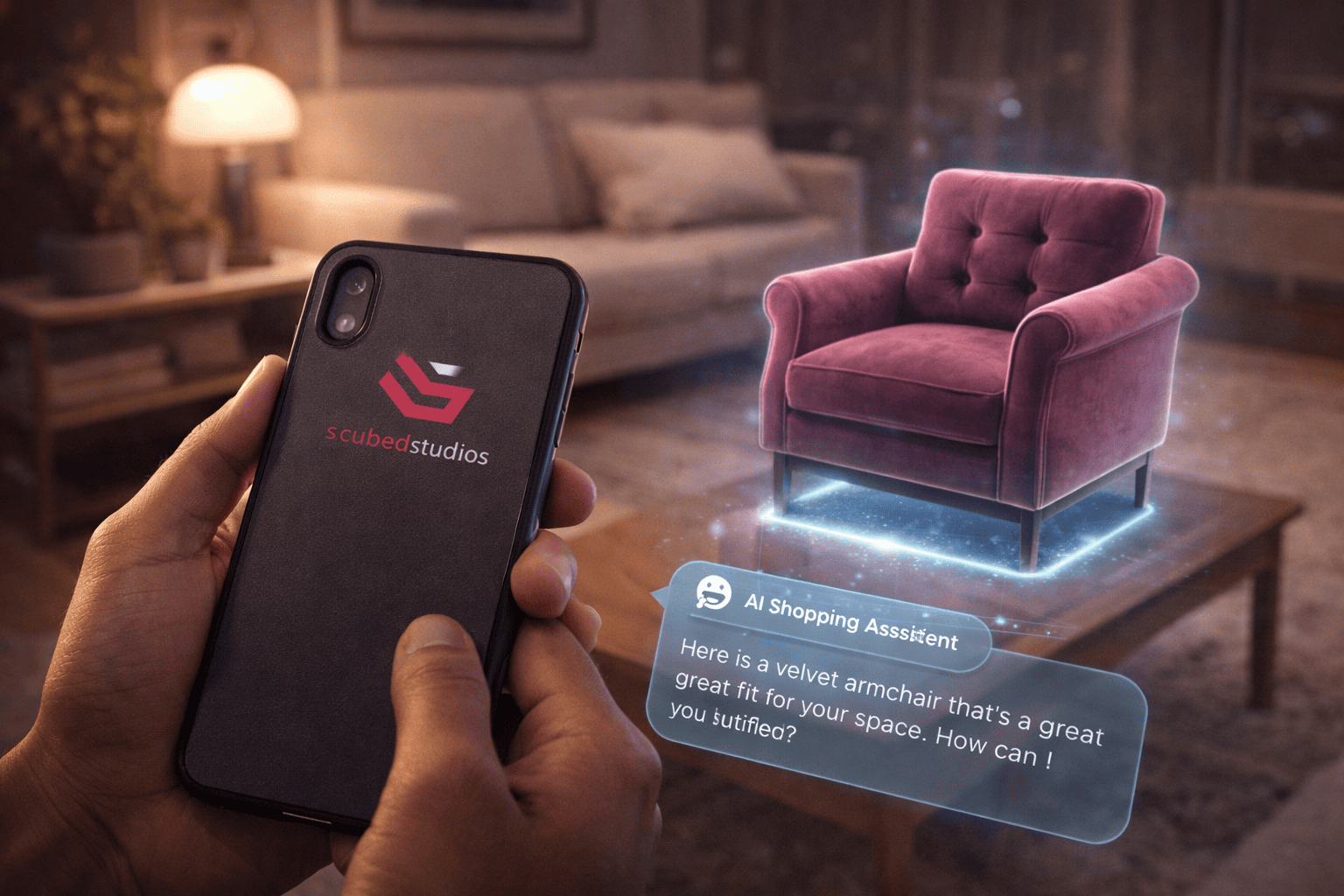
Holographic armchair preview in living room

Holographic armchair preview in the living room

AI-Powered Personalisation and Merchandising

AI has moved from basic “customers also bought” to full-funnel orchestration:

  • Dynamic merchandising: Homepage, category pages, and search results rearranged in real time based on user intent, seasonality, and inventory.
  • Micro-segmented offers: Pricing, bundling, and recommendations tuned to predicted lifetime value and churn risk.
  • Conversational commerce: On-site AI shopping assistants can interpret natural language queries (“I need a business-casual outfit for a summer event under $200”) and assemble shoppable looks.

By 2026, the future of e‑commerce assumes:

  • AI is a co‑pilot for shoppers, not just a recommendation engine.
  • Merchandisers work with AI-generated insights but retain oversight for brand, margin, and ethics.
  • Regulatory and brand trust constraints keep “hyper-personalisation” from going too far—transparent controls and privacy‑first data practices are essential.

 

Futuristic drone landing at sunset

Futuristic drone landing at sunset

Faster, Greener, Smarter Fulfilment

Logistics remains a critical differentiator:

  • Same‑day and next‑day delivery is standard in urban areas; 2–3 day shipping is the baseline expectation elsewhere.
  • Micro-fulfilment centres within cities shorten last-mile distances, reducing emissions and improving reliability.
  • Green delivery options (bike couriers, EV fleets, consolidated shipments) are increasingly offered—and often chosen—especially when clearly labelled with CO₂ savings.

By 2026:

  • Many checkouts display the carbon impact of delivery options, nudging customers toward greener choices.
  • Smart routing systems optimise for cost, speed, and sustainability simultaneously.
  • Packaging becomes a bigger brand touchpoint: minimal, recyclable, or reusable materials, with a design that reinforces brand values.

Social Commerce and Creator-Led E‑commerce

Social platforms have become full-scale shopping ecosystems:

  • Shoppable short videos and livestreams drive impulse buys and product discovery.
  • Creators host live demos, fit checks, and Q&A sessions with direct purchase links.
  • Affiliate and revenue-share models are more transparent and standardised.

The future of e‑commerce in 2026 is heavily creator‑mediated:

  • Trusted creators function as curators for overwhelmed consumers.
  • Smaller, niche brands gain traction through micro-influencers who have deep audience trust.
  • Brands invest in long-term creator partnerships instead of one-off sponsored posts.

Subscription Models and “Everything-as-a-Service”

Subscriptions continue to evolve:

  • Replenishment subscriptions (coffee, supplements, pet supplies) are refined with smarter cadence prediction to avoid overstock and churn.
  • Access-based subscriptions (members-only pricing, early drops, special collections) replace traditional loyalty schemes for many brands.
  • “Everything-as-a-service” spreads: hardware + services bundles (appliances with maintenance plans, fitness equipment with content, EVs with subscription-based features).

Key success factor:

  • Flexibility. Easy pausing, skipping, and cancelling are critical. Clunky subscription flows are now a serious brand risk.
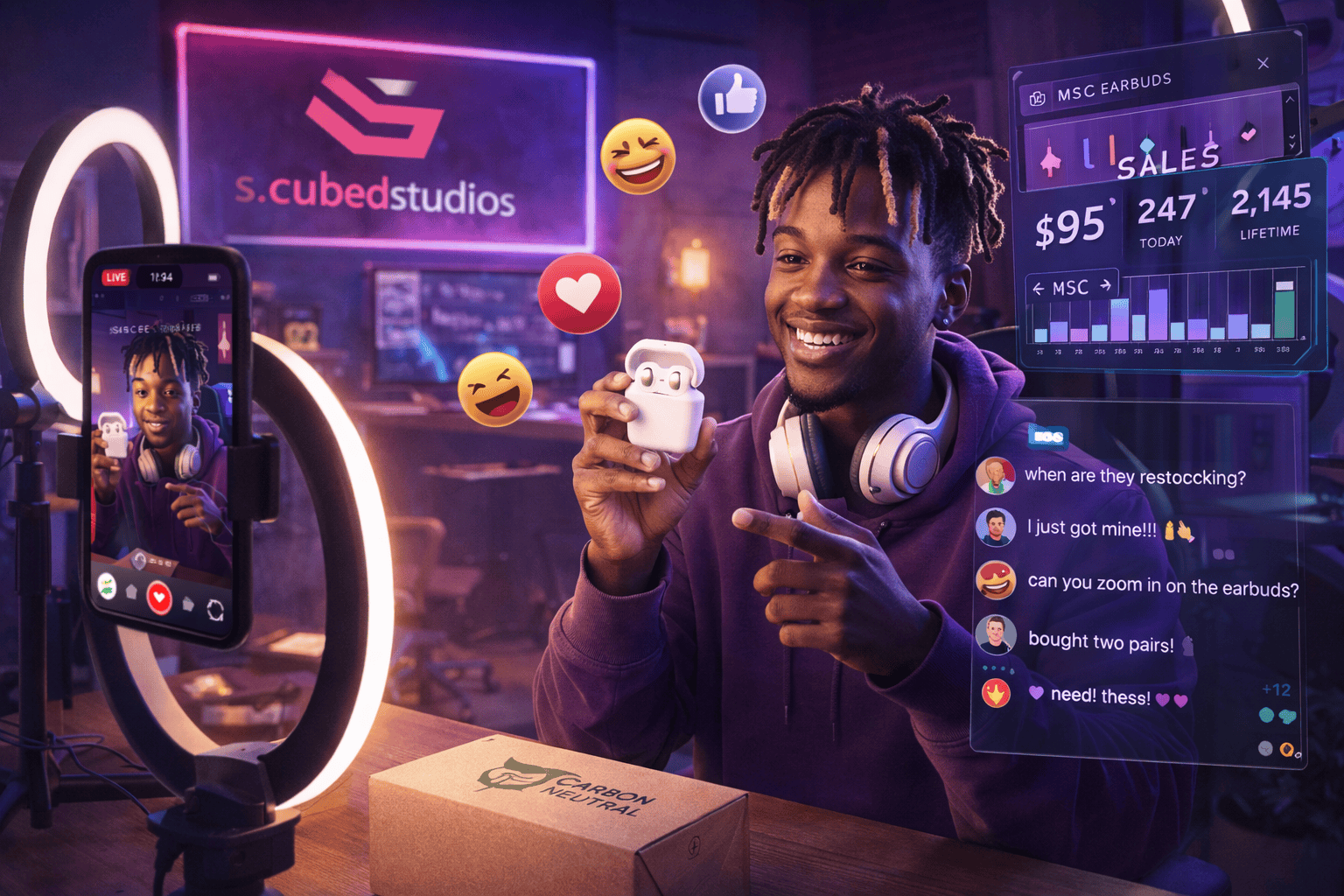
Live stream showcase of wireless earbuds

Live stream showcase of wireless earbuds

Trust, Reviews, and Authenticity

Trust is the true currency of the future of e‑commerce:

  • Verified reviews (purchase-verified, AI-checked for authenticity) gain prominence; fake or incentivised reviews are increasingly filtered or flagged.
  • UGC (user-generated content)—photos, videos, and long-form reviews—is essential for conversion, especially in fashion and beauty.
  • Transparent sourcing, ethical manufacturing, and clear policies on returns and warranties are front and centre.

Consumers by 2026:

  • Are more skeptical of polished ads and more responsive to real-world usage content.
  • Expect retailers to handle disputes fairly and visibly.
  • Use social media sentiment as an informal “rating” of brands.

Regulatory and Data Privacy Landscape

Global regulatory frameworks have tightened:

  • Consent for tracking and profiling is explicit and granular.
  • Data portability and deletion are standard features in account dashboards.
  • Dark patterns around subscriptions, privacy, and cancellations face legal scrutiny and fines.

Winning brands:

  • Treat privacy as a value proposition, not just compliance.
  • Invest in first-party data: building direct relationships via memberships, communities, and value-added content.

Conclusion

The future of e‑commerce in 2026 is not about more pop-ups or more channels; it’s about better experiences:

  • Unified, consistent journeys across online and offline.
  • Rich, immersive product understanding before purchase.
  • Faster, greener logistics backed by transparent data.
  • Authentic relationships mediated by creators and communities.

Brands that centre trust, utility, and human-centric design—while embracing AI, AR, and unified commerce—will define the next era of online retail.

The Rise of AI Agents: How Businesses Are Reinventing Customer Interaction in 2026

The Rise of AI Agents: How Businesses Are Reinventing Customer Interaction in 2026

The Rise of AI Agents: How Businesses are Reinventing Customer Interaction in 2026

In recent years, artificial intelligence (AI) has emerged as a groundbreaking force across various industries, fundamentally transforming how businesses engage with their customers. As we venture into 2026, the rise of AI agents is poised to reshape the landscape of customer interactions, offering unprecedented opportunities for efficiency, personalization, and innovation. With over 15 years in the field of customer experience and technology integration, I will explore the evolution of AI agents, their impact on customer service, and the future prospects that businesses must navigate.


Understanding AI Agents

AI agents, often referred to as chatbots or virtual assistants, have evolved dramatically from simple scripted responses to sophisticated systems capable of natural language processing, sentiment analysis, and contextual understanding. These agents leverage machine learning algorithms to learn from customer interactions continually, allowing them to adapt and improve over time. By 2026, AI agents are expected to handle a significant portion of customer queries, enabling businesses to streamline their operations while enhancing customer satisfaction.

3D conceptual customer journey with AI personalization, African humans Regenerate Good response Bad response

Enhancing Customer Experience through Personalization

One of the most significant benefits of AI agents is their ability to provide personalized experiences. In 2026, businesses will harness the power of AI to analyze customer data and preferences, enabling agents to tailor interactions based on individual needs. For instance, e-commerce platforms will utilize AI agents to recommend products based on previous purchases, browsing history, and even social media behavior.

Moreover, the integration of sentiment analysis will allow AI agents to gauge a customer's emotional state during interactions. By identifying whether a customer is frustrated, satisfied, or confused, businesses can proactively address issues and create a more positive experience. This level of personalization not only fosters customer loyalty but also drives repeat business, ultimately contributing to higher revenue.


Automating Routine Tasks and Streamlining Operations

As AI agents become increasingly proficient, they will play a pivotal role in automating routine tasks that often burden human customer service representatives. By 2026, businesses can expect AI agents to handle frequently asked questions, appointment scheduling, and basic troubleshooting, freeing up human agents to focus on more complex queries that require emotional intelligence or nuanced understanding.

This automation will lead to reduced wait times for customers, which is a critical component of enhancing customer satisfaction. In an era where consumers value prompt and efficient service, AI agents will prove essential in meeting these expectations. Furthermore, the cost savings associated with reducing the need for extensive customer service teams mean that businesses can allocate resources to areas that drive growth and innovation.

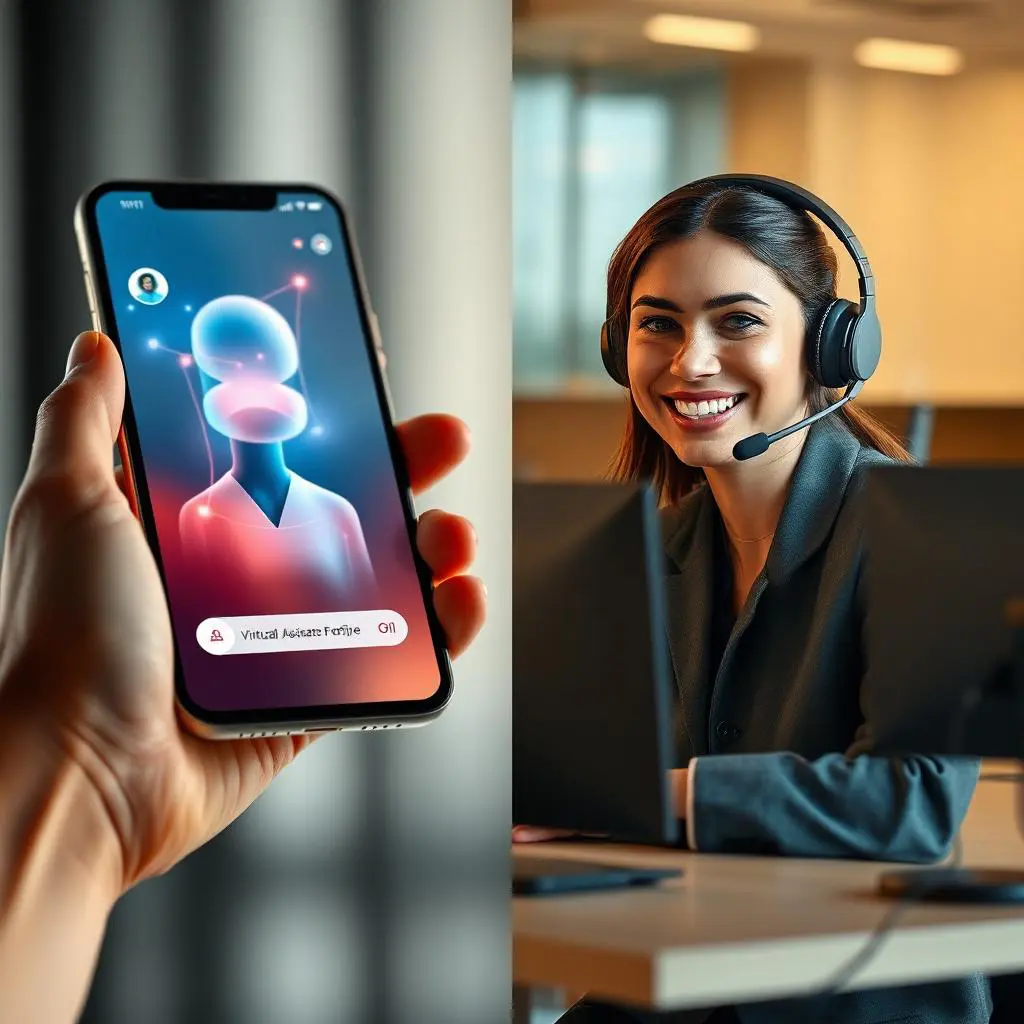
Split-screen phone avatar and human customer service agent

Case Studies: Leading the Way

Several companies are already leading the charge in the adoption of AI agents, setting a precedent for others to follow. For example, major players in the retail sector have successfully integrated AI-powered chatbots into their customer service strategies. These chatbots have been trained on vast datasets, enabling them to provide accurate and relevant information while also learning from new interactions.

Tech giants are also leveraging AI agents to enhance customer interactions. Companies like Apple, Amazon, and Google have developed virtual assistants that not only answer queries but also integrate seamlessly with other products and services. By 2026, we can expect even more sophisticated AI agents from these companies, capable of carrying out complex tasks such as making travel arrangements or managing daily schedules on behalf of users.


Challenges and Considerations

Despite the numerous advantages of AI agents, businesses must also be mindful of the challenges that come with their implementation. Concerns regarding data privacy and security remain paramount, especially as AI agents collect and analyze vast amounts of personal information. Companies will need to prioritize transparent data practices and comply with relevant regulations to build and maintain customer trust.

Additionally, while AI agents can automate routine tasks, they cannot fully replace the human touch in customer service. Businesses must strike a balance between automation and personalization, ensuring that customers have access to human representatives when facing complex issues or emotional situations. The ideal approach is to use AI agents as a complement to human agents, creating a hybrid model that maximizes efficiency while maintaining empathy in customer interactions.

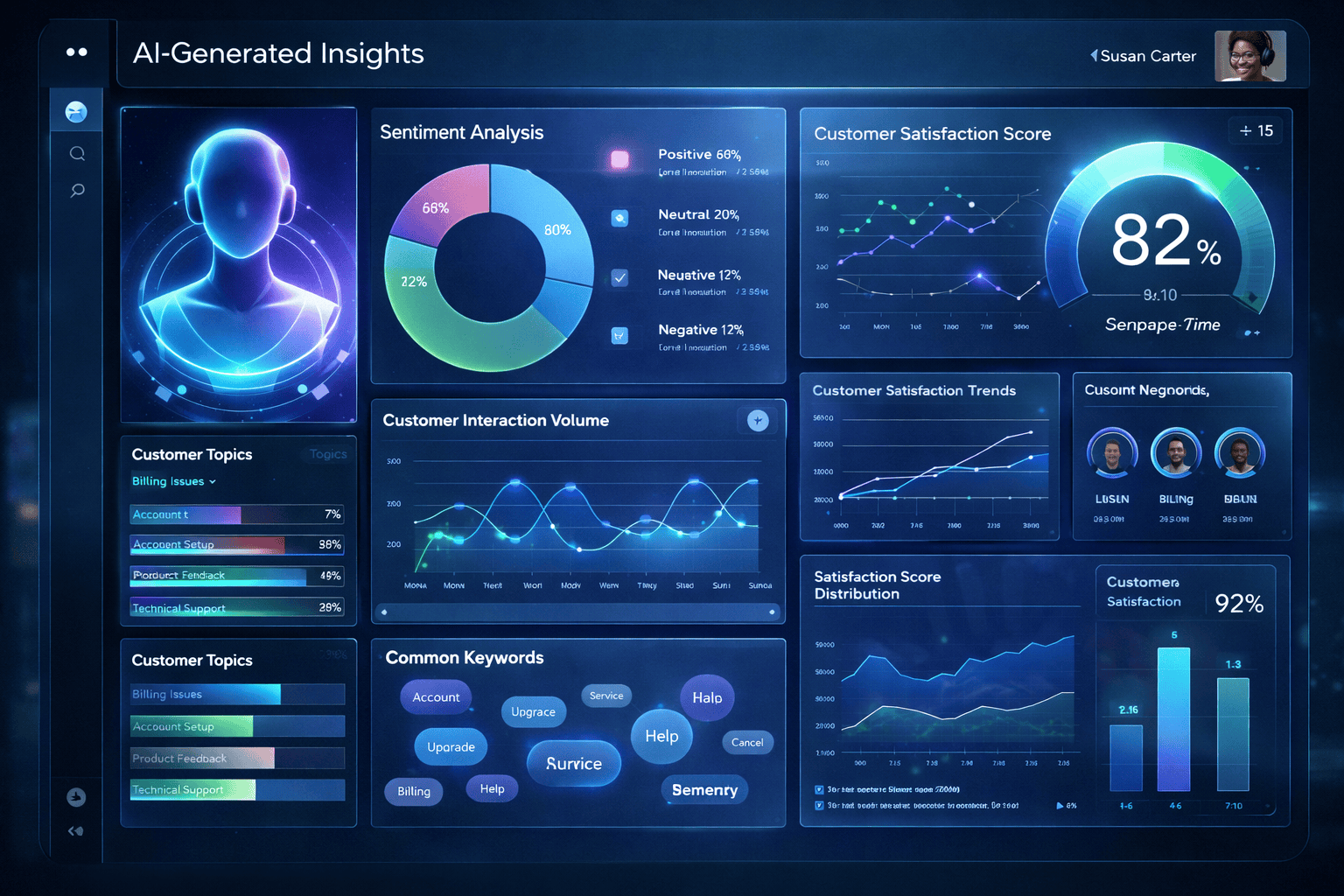
A digital dashboard filled with analytics and insights generated by AI,

The Future Landscape of Customer Interaction

As we look ahead to 2026 and beyond, the future of customer interaction will be defined by the continued evolution of AI agents. Businesses will increasingly rely on these agents to drive efficiency, enhance personalization, and provide proactive support. Furthermore, advancements in natural language processing and machine learning will enable AI agents to engage in more human-like conversations, fostering deeper connections with customers.

To remain competitive in this rapidly changing landscape, businesses must be proactive in adopting AI technologies and adapting their customer service strategies. By embracing AI agents, companies can not only streamline their operations but also provide exceptional experiences that resonate with customers.

Redefining Social Media Advertising for Nigerian Small Businesses

Redefining Social Media Advertising for Nigerian Small Businesses

Redefining Social Media Advertising for Nigerian Small Businesses


The digital landscape in Nigeria presents a paradox that challenges conventional marketing wisdom. While social media platforms have become the primary battleground for customer acquisition among Nigerian SMEs, a staggering 64% of businesses report difficulty measuring meaningful ROI from their social advertising investments (Statista, 2023). This disconnect between platform ubiquity and strategic effectiveness reveals a fundamental gap in how Nigerian businesses approach social media advertising.

At s.cubedstudios, our analysis of over 200 Nigerian SME campaigns reveals that success lies not in following global best practices, but in engineering advertising strategies that acknowledge and leverage Nigeria's unique digital ecosystem. The difference between thriving and surviving in this market often comes down to understanding the nuanced interplay between cultural context, technological constraints, and consumer behavior patterns that define the Nigerian digital experience.


The Nigerian Digital Context: Beyond Platform Statistics

Nigeria's social media landscape operates on principles that diverge significantly from Western markets. Facebook's 22 million Nigerian users (NapoleonCat, 2023) represent more than passive content consumers; they constitute active participants in a digital economy where trust, community validation, and cultural resonance determine purchasing decisions. The revelation that 35% of Lagosians now shop via Instagram Reels (GSMA, 2023) signals a fundamental shift toward visual commerce that transcends traditional e-commerce models.

Perhaps more intriguingly, platforms like X (formerly Twitter) have evolved into sophisticated customer service ecosystems, particularly within Nigeria's dynamic fintech sector. This evolution reflects a broader trend where Nigerian consumers expect real-time, conversational engagement from brands, transforming social platforms from advertising channels into comprehensive customer relationship management systems.


Strategic Architecture: Moving Beyond Demographic Targeting

The sophistication of successful Nigerian social media campaigns lies in their approach to audience architecture. Traditional demographic targeting yields mediocre results in a market where cultural affinity often outweighs economic indicators. Progressive Nigerian businesses are discovering the power of psychographic layering, combining interest-based targeting with behavioral patterns specific to local contexts.

Consider the strategic approach of layering "Nollywood enthusiasts" with "aspiring entrepreneurs" to reach potential customers for business development services. This methodology, which we term "cultural intersection targeting," has consistently outperformed traditional age and income-based segments. One Abuja-based restaurant client achieved a 60% reduction in cost per acquisition by targeting individuals who demonstrated both interest in local cuisine and engagement with neighborhood community groups.

The platform-specific creative strategies that drive results in Nigeria require deep understanding of local communication preferences and consumption patterns. Facebook's carousel format becomes powerful when used to tell product stories that resonate with Nigerian narrative traditions. Instagram's vertical video ads achieve maximum impact when incorporating local languages like Yoruba or Pidgin, creating authentic connections that transcend mere product promotion. LinkedIn, often overlooked in Nigerian B2B strategies, proves remarkably effective for lead generation when content focuses on local case studies and success stories rather than generic business advice.


Operational Excellence in Constrained Environments

Budget optimization in the Nigerian market demands strategic thinking that acknowledges both opportunity and constraint. The practice of initiating campaigns with ₦5,000 daily test budgets reflects not just cost consciousness, but intelligent market entry strategy. These initial investments serve as sophisticated market research tools, generating engagement data that informs larger campaign investments.

The strategic use of engagement campaigns to warm audiences before implementing retargeting represents sophisticated funnel management adapted to Nigerian consumer behavior. Nigerian consumers typically require multiple touchpoints and social proof before making purchasing decisions, making this warming strategy essential for sustainable campaign performance.


Addressing Systemic Challenges Through Strategic Innovation

Nigerian businesses face unique challenges that require innovative advertising approaches. The persistent issue of consumer trust in digital transactions has led successful companies to integrate user-generated content and payment verification badges directly into their advertising creative. This strategy transforms potential weaknesses into competitive advantages by addressing consumer concerns proactively rather than reactively.

Data cost sensitivity among Nigerian consumers has inspired creative approaches to advertising content. Successful campaigns increasingly feature compressed video content under 15 seconds and text-heavy images that convey value propositions without consuming excessive data. This constraint has paradoxically led to more focused, impactful creative that communicates brand messages more effectively than data-intensive alternatives.

The challenge of ad fatigue in Nigeria's highly connected urban markets has driven the development of dynamic creative rotation strategies. Successful businesses now implement bi-weekly creative refreshes that incorporate trending sounds, local memes, and current events, maintaining relevance and engagement in fast-moving digital conversations.


Measurement Frameworks for Sustainable Growth

The evolution beyond vanity metrics represents a maturation of Nigerian digital marketing that mirrors global trends while addressing local realities. Progressive businesses now focus on Cost Per Lead (CPL) calculations that account for the extended sales cycles common in Nigerian markets. The relationship between Customer Lifetime Value (CLV) and Customer Acquisition Cost (CAC) provides crucial insights for sustainable growth strategies.

A compelling example emerges from a Lagos pharmacy client who achieved ₦8 in CLV for every ₦1 invested in advertising through strategic WhatsApp retargeting. This success illustrates how platform integration and local communication preferences can create exponential returns when properly executed.


The Conversational Commerce Revolution

The integration of conversational commerce represents the next evolution in Nigerian social media advertising. The statistic that 70% of Nigerian shoppers message brands before purchasing (Meta, 2023) reveals an opportunity that extends far beyond traditional advertising metrics. Forward-thinking businesses are implementing WhatsApp Business API integrations that transform advertising clicks into automated sales conversations.

This approach acknowledges a fundamental truth about Nigerian consumer behavior: purchasing decisions are inherently social and conversational. Businesses that can seamlessly transition prospects from social media advertisements into meaningful conversations consistently outperform those relying on traditional conversion mechanisms.


Strategic Implications for Industry Leaders

The data revealing that Nigerian businesses using geo-targeted social ads achieve 3x higher engagement than global averages (ScubedStudios Campaign Data, 2023) suggests that local relevance creates disproportionate competitive advantages. This finding challenges the conventional wisdom that global advertising strategies can be successfully localized through simple translation or demographic adjustment.

Instead, the most successful Nigerian social media advertising strategies emerge from deep understanding of local cultural dynamics, technological constraints, and consumer behavior patterns. The businesses that will dominate Nigeria's digital economy are those that view these unique characteristics not as limitations to overcome, but as competitive advantages to leverage.


Conclusion: The Strategic Path Forward

Social media advertising in Nigeria represents more than a marketing channel; it constitutes a strategic imperative for businesses seeking sustainable growth in Africa's largest economy. The convergence of massive platform adoption, sophisticated targeting capabilities, and evolving consumer preferences creates unprecedented opportunities for businesses willing to invest in culturally intelligent, strategically sophisticated advertising approaches.

The future belongs to Nigerian businesses that can combine global digital marketing sophistication with deep local market intelligence. Success requires moving beyond tactical campaign management toward strategic ecosystem thinking that integrates social media advertising with broader customer relationship management, brand building, and business development objectives.

For industry professionals, the Nigerian market offers a compelling case study in how emerging economies can leapfrog traditional marketing evolution, creating innovative approaches that may well influence global digital marketing practices. The businesses that recognize and act on this opportunity today will define the competitive landscape for years to come.


References:

  1. Statista (2023). Social Media Adoption in Nigeria
  2. GSMA (2023). Mobile Economy: West Africa
  3. Meta (2023). Conversational Commerce Trends: Nigeria
  4. NapoleonCat (2023). Nigeria Social Media User Statistics
Common Branding Mistakes

Common Branding Mistakes

COMMON BRANDING MISTAKES

There are common branding mistakes companies often make that decreases their business ability to communicate with their target audience. There are certain companies that have create great brand image over the years, and one such company is the beverage giant, Coca-Cola. Their distinctive and obvious red and white lettering and powerful trademark make it impossible for anyone to confuse them for another soft drink manufacturer. The branding strategy of this great company will serve as a guide to small businesses who intend to grow and achieve great success soon.

What are the common branding mistakes that brands make that can impact the business negatively? Having carried out some research on this topic, I noticed that the following mistakes have been costly to small businesses.

Inability to identify brand strength:

As a beginner in a business, you cannot expect to have the same brand strength with a product which is already a market leader in that same environment. You must not expect your customers to suddenly recognise your product just like the market leader. Take for example the beverage company, Coca-cola, that has been in existence for over two centuries, imagine a budding beverage company that is new in the beverage business and wants to make Coca-cola is competitor, and starts copying its branding strategies, such a company may not last in that business. Some people already have these mentalities that all detergents are Omo, all cooking spices are Maggi, or noodles are Indomie. It is therefore wise to create a branding strategy by first defining and differentiating it from what is already existing in the market.

Failing to research the opposition.

When you research the opposition, it will help you understand what the established businesses in your industry have done, where they have failed and where they have succeeded. Then you know what branding strategies you can take advantage of. You should also carry out research on products, services, targets, audience, websites and social platforms.

Brand inconsistency:

Inconsistency has a negative impact on your brand, it brings about lack of trust and disloyalty. Companies like Coca-cola has been consistent in their branding for over 130 years. When you are consistent with your branding it will bring about familiarity, loyalty and credibility. Once your designer creates a brand style guide, the next thing you should be doing is to consistently follow the brand’s style guide on all your marketing campaigns across different channels, including your website, social networking profiles and printed materials.

If you’re not consistent, your brand will end up appearing unprofessional and lose identity, making your brand less trustworthy. Managing brand consistency across all marketing channels sets you apart from your competitors and helps you to accelerate the growth of your brand. A consistent identity for your brand will not only foster a sense of trust and comfort for potential customers, but it also plays a vital role in influencing your customers’ purchasing decision.

Careless changing of the brand logo:

It is important that you carry your audience or customers along, do not just suddenly change your logo feeling that your audience or customers should be able to know or recognise it as if it doesn't matter. You have to carry them along so that they will know that there are changes already. Sometime ago, Gala, a leading sausage roll company, changed its wrapper without proper communication with its consumers, this didn’t go down well with the consumers as some of them taught Gala was out of production or the product available was fake. People were already used to and familiar with the old wrapper, immediately Consumers they switched over to the next best sausage-roll, Superbite, a product of chi limited, makers of Superbite. This brought a great loss to the makers of Gala.

Ignoring first impression:

There is a common saying that “first impressions last longer and matters a lot”. The first impression could be the product packaging design, the taste, the quality and the quantity which is the first point of contact between your brand and the customer. Your customers should be able to identify your product anywhere they go because its quality remains the same. Your packaging sells your brand, so if it is not well packaged, do not expect to make great sales in return.

Relying too much on Design trends:

Relying too much on design trends can make you to lose focus on the purpose and goals you are pursuing using your products. It can be easy to get swept up in what looks cool at the moment but remember that your brand will likely need to weather multiple waves of design trends without looking dated. It is advisable that you use design trends as a source of inspiration but not to rely on them too much when you want to redesign.

Using a vague copy to describe your brand:

Using a vague copy to describe your brand can be a major setback when it comes to positioning your brand in the market and distinguishing yourself from your competitors. To make your brand standout and unique, you have to understand what makes it unique and different from other existing brands. So many brands have been described wrongly for what they do not represent which in turn affects their sales.

Hiring an unprofessional Designer:

Nothing can hurt your brand worse than an amateur looking-logo. No matter if you feel OK with the logos of your graphic standards of your brand, it’s always worth taking the time and spending money to hire a professional graphic designer specializing in branding and logo development. Ask your designer to create a brand style guide that defines the colour palette, typography, visual style, imagery, etc., so you can follow it consistently on all your marketing channels.

Attaching Your Brand to the Wrong Things:

When it comes to branding, more is not more. In other words, use your company name and logo selectively and sparingly -- especially when it comes to branded products, sponsorships, and events. When you attach your brand name to something, it should reflect and be compatible with your brand's values and voice. When a brand partners with another company or product that doesn't directly relate to or mesh well with their own message, it can seem inconsistent and untrustworthy to consumers.

Reasons To Constantly Updating Your Facebook Business Page With New Content

Reasons To Constantly Updating Your Facebook Business Page With New Content

Reasons for Adding New Content to Your Facebook Business Page

Content marketing is a long-term strategy that uses content in a variety of formats to build a stronger relationship with your audience, capture their audience, improve engagement and improve brand recall. Contents can be in the form of Photos, Videos, Articles, Comics, Animations, Plugins, Infographics etc. Adding new contents to our business page is very important for the following reasons:

Greater return on a smaller investment: Content marketing costs about 62% less than traditional and outbound marketing tactics. Therefore, it is a lot cheaper than other forms of advertising. One form of content marketing that offers the widest and highly targeted reaches with some of the best Return of Investment (ROI) is the email. Highly targeted email campaigns using segment lists, can generate up to 760% more revenue than traditional email blasts.

It exposes your business to new prospects and a larger audience: When you write high quality content, your audience will take note and may share these contents thereby reaching more audiences and these audience may also in turn share to more audience and the network continues to grow like that.

It improves brand awareness: You will stay in the forefront of consumer’s minds by constantly posting new contents, engaging them regularly and with that knowing what they want. If your posts are not frequent and your page is not engaging, then there may be tendency of losing your audience to a more active blogger who is always engaging his/her audience.

It improves engagement with your target market: Facebook generally is an engaging platform than most social media platforms. It is therefore important to use its full potentials. One should engage with his/her audience through various posts, with this you will have the opportunity to improve your brand recognition as well as learning more about your target audience, specifically their wants and needs.

It grows your target audience: When you make posts especially if it is a very good one, you may have some audience who may love such posts very well and may decide to share it to their friends and family members, who will in turn share it to other friends. This act grows your audience and helps you to market and advertise your page faster without it costing you anything, it is therefore important to constantly add new contents to help you achieve this goal without much stress and costs.

Improves your search engine visibility: Adding new content to your Facebook page improves your search engine visibility. When you use keywords, which will be read by major search engines, it drives traffic to your site, this will improve your site’s relevance and improves your ranking in search engine results.

To face and cope with competition: To be on the same page with your competitor or to be better than your competitor, you need to always add new content to your Facebook page. On the internet as it always was and would always be, content adding is very important. You should always keep your page fresh and engaging. This will make you achieve your goals and optimize your ROI. If fresh new contents are not seen on your page regularly, you may lose out of the competition and if possible, the business completely.

Useful Digital Marketing Blog Post Ideas

Useful Digital Marketing Blog Post Ideas

Useful Digital Marketing Blog Post Ideas


The main reasons why we do research is to search for useful contents on the internet. We look for guides, case studies and resources that can help solve our problems and point us to the right directions in our businesses. Below are lists of useful Blog post ideas for digital marketing.

(1)  The List Posts:

A list post is one of the easiest to put together and can be versatile. They can be helpful and quick to read. When you want to list, you create the list of books, tools, resources or any topic that your market segment finds useful and relevant your business. Although list posts are text heavy hence it is important you use images which will help to break down the text thereby making it easier to read and much more accepted by your audience.

(2)   Case Study Post:

case studies provide great details and go beyond simple testimonials by showing real-life examples. In case study posts, get specific and talk strategy. Outline and unpack the details of topics such as projects, events, or processes. Exhaust completely every details of your story including the successes and failures, this will make your stories more authentic. Use actual and real statistics. Also include references if there are any.

(3)   Knowing How To Posts:

In writing articles, it is important you describe how to execute a process, use images, video or audio to enrich your posts and make it accessible to your audience. This can be done in various ways, you can introduce the content by outlining steps, and breaking down the articles into section.

(4)    Frequently Asked Questions (FAQ):

To detect FAQs; there are questions that are continually asked by customers or audience, these questions are referred to as FAQs. It is a great way to bring traffic to your website from search engines. To make your posts interesting and on point, you build your article around the FAQs topics and with detailed explanations. One can also use a checklist post. This lists the steps a person should take to complete a specific task.

(5)    Problem/Solution posts:

To do this, first you define a problem, then present a suitable solution to it. The given solution can come in the form of a product or service you sell. it can also be what people can obtain freely. The problem/solution post can cross over into the territory of other blog post types such as the FAQ post, how-to post or checklist post.

(6)    Research Post:

Conducting your own primary research around a topic in your niche is one of the best ways to build blog content that gets attention that is because primary research is hard to gather and extremely time consuming. Collecting all the research for someone and providing it for free all in one piece endears your brand to prospects and establish it as an authority on that particular topic.

(7)   Statistical Post:

Using statistics to round up your research post makes it more authentic. Statistics gives the reader more concise facts and data with references to fall back on. If the statistics was gathered from multiple locations it creates a very solid, well-rounded posts.

(8)   Ultimate Guide Post:

This is a detailed and comprehensive post on a topic in your niche. When it is done correctly, It helps to bring people back to your site and makes you an authority in your market. This post is usually long, with thousands of words, many figures and examples.

(9)   Series Posts:

When you break an exceptionally lengthy piece inti a series of posts, it becomes a series post. An example is the authentic post being broken into bits. One can break it into days, weeks, or even months. This enable you to maintain and engage your audience or customers.

(10)   Definition Posts:

This is an article that defines a topic. For this post you can create content around a particularly confusing or complex topic and then explain and inform your readers about the topic. You can also consider a series of posts which defines your niche to engage your readers.

(11)  YouTube Cut-up Post:

you can use a popular YouTube video to create stellar content, this video can be yours or someone's else (with permission). To create an article from this, you will take screenshots at different stages during the video and add text explanations, then embed the entire video into your post. With this you will engage your readers more with your posts for they will react, like or make comments.

Pin It on Pinterest