
by Yomi Ashiru | Apr 13, 2026 | Mobile App, Web App
In Nigeria’s rapidly evolving digital landscape, businesses from Lagos startups to Abuja enterprises face a critical decision: should you invest in a mobile app or a web app? With smartphone penetration reaching over 50% across Nigeria and data costs becoming more affordable, the choice between these two digital solutions can significantly impact your business growth and customer engagement.
At s.cubedstudios limited, our Lagos-based development team has guided countless Nigerian businesses through this decision, helping them choose the right digital solution that aligns with their budget, goals, and target audience. The answer isn’t always straightforward – what works for a fintech startup in Victoria Island might not suit a logistics company in Kano or a retail business in Port Harcourt.
Understanding the fundamental differences between mobile apps and web apps, along with how Nigerian consumers interact with digital platforms, will help you make an informed decision that drives real business results in naira.
Understanding Mobile Apps vs. Web Apps in the Nigerian Context
A mobile app is software designed specifically for smartphones and tablets, downloaded from app stores like Google Play Store or Apple App Store. Think of popular Nigerian apps like Kuda Bank, PiggyVest, or Jumia – these are native mobile applications built for specific operating systems.
A web app, on the other hand, runs in web browsers and can be accessed from any device with internet connectivity. Examples include the web versions of Nigerian platforms like Paystack’s dashboard, Flutterwave’s merchant portal, or even WhatsApp Web. Users don’t need to download anything; they simply visit a website that functions like an app.
For Nigerian businesses, this distinction becomes crucial when considering factors like data costs, device capabilities, and user behaviour patterns across different regions of the country.
The Mobile App Advantage for Nigerian Businesses
Mobile apps offer several compelling benefits that align well with how Nigerians use their smartphones. The offline functionality is particularly valuable in Nigeria, where internet connectivity can be inconsistent across different states. A well-designed mobile app can store essential data locally, allowing customers to browse products, access account information, or use basic features even when network connectivity is poor.
Push notifications give Nigerian businesses a direct communication channel to customers’ devices. Whether you’re a restaurant in Ikeja announcing daily specials or an e-commerce store in Abuja promoting flash sales, push notifications can drive immediate engagement and sales. This is especially powerful during events like Black Friday sales or Nigerian holidays when timing is crucial.
The user experience of mobile apps typically feels more responsive and intuitive because they’re built specifically for touch interfaces. For Nigerian businesses targeting younger demographics who are highly mobile-savvy, this enhanced experience can be a significant competitive advantage.
Mobile apps also provide better access to device features like cameras, GPS, and sensors. A Nigerian real estate app could use GPS for location-based property searches, while a fintech app might use biometric authentication for secure transactions – features that matter greatly in Nigeria’s security-conscious financial landscape.
From a branding perspective, having an app icon on customers’ home screens provides constant visibility. Every time a customer looks at their phone, your business gets another impression, which can be particularly valuable for Nigerian brands building recognition in competitive markets.
When Web Apps Make More Sense for Nigerian Businesses
Web apps offer distinct advantages that often make them the smarter choice for many Nigerian businesses, especially those just starting their digital journey or operating on tight budgets.
The development cost difference is substantial. Building a mobile app requires creating separate versions for Android and iOS, essentially doubling development time and cost. For Nigerian SMEs operating on lean budgets, web apps provide a cost-effective way to deliver app-like functionality without the hefty price tag.
Maintenance and updates are significantly simpler with web apps. When you update a web app, changes are immediately available to all users without requiring them to download updates from app stores. This is particularly important in Nigeria, where data costs still influence user behavior and many people postpone app updates to conserve data.
Web apps work across all devices and operating systems without modification. Whether your customers use Android phones, iPhones, tablets, or desktop computers, they can access your web app seamlessly. This universal accessibility is crucial for Nigerian businesses serving diverse customer bases across different economic segments.
The distribution advantage of web apps cannot be understated. Users can access your web app immediately through any browser without going through app store approval processes. For Nigerian businesses needing to launch quickly or test market concepts, this immediate availability is invaluable.
Search engines can index web apps, improving your overall SEO strategy. This means potential customers searching for services in Lagos, Abuja, or other Nigerian cities can discover your business through organic search results.
Cost Considerations for Nigerian Businesses
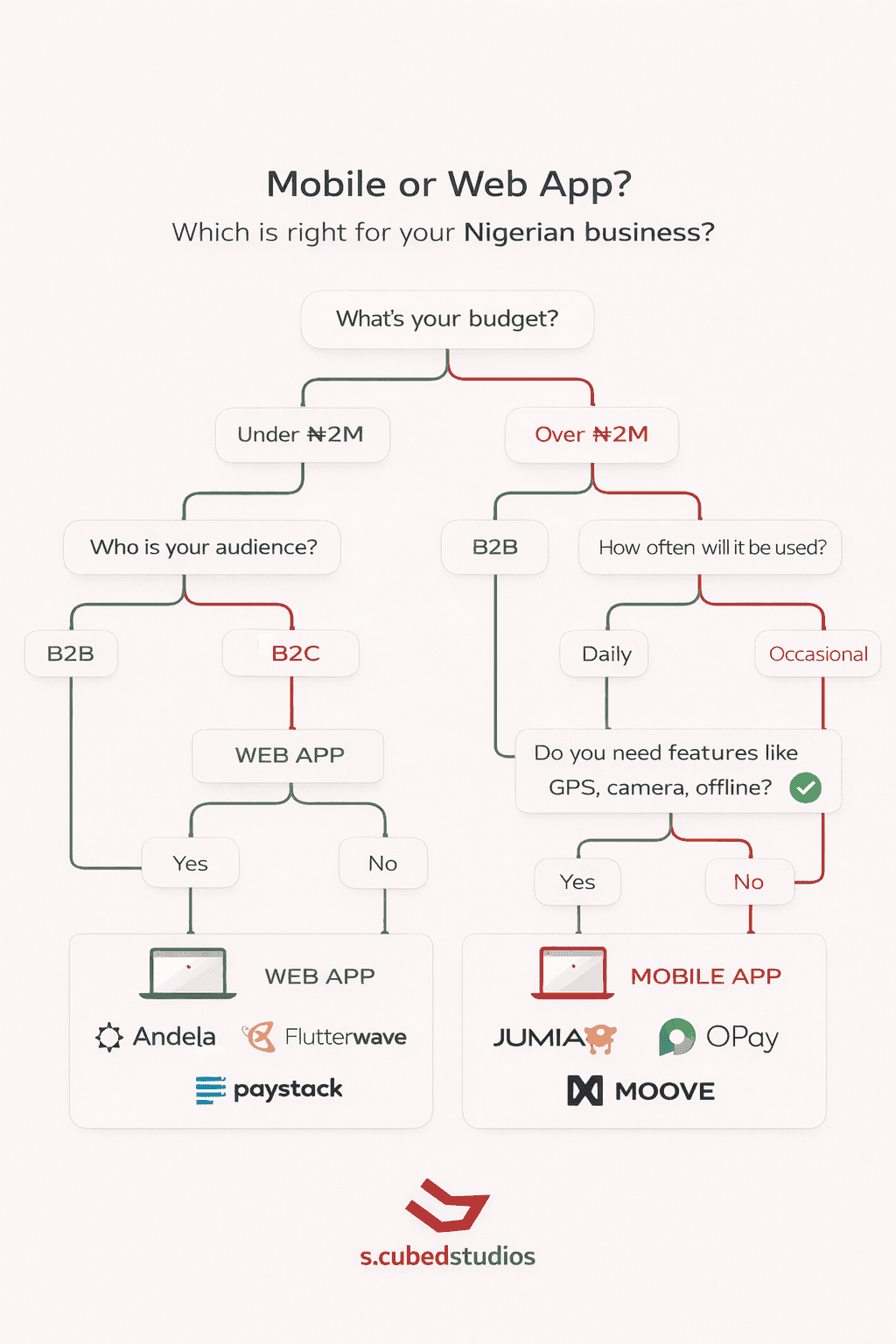
Budget reality is often the deciding factor for Nigerian businesses choosing between mobile and web apps. Let’s break down the real costs in naira terms that Nigerian entrepreneurs need to consider.
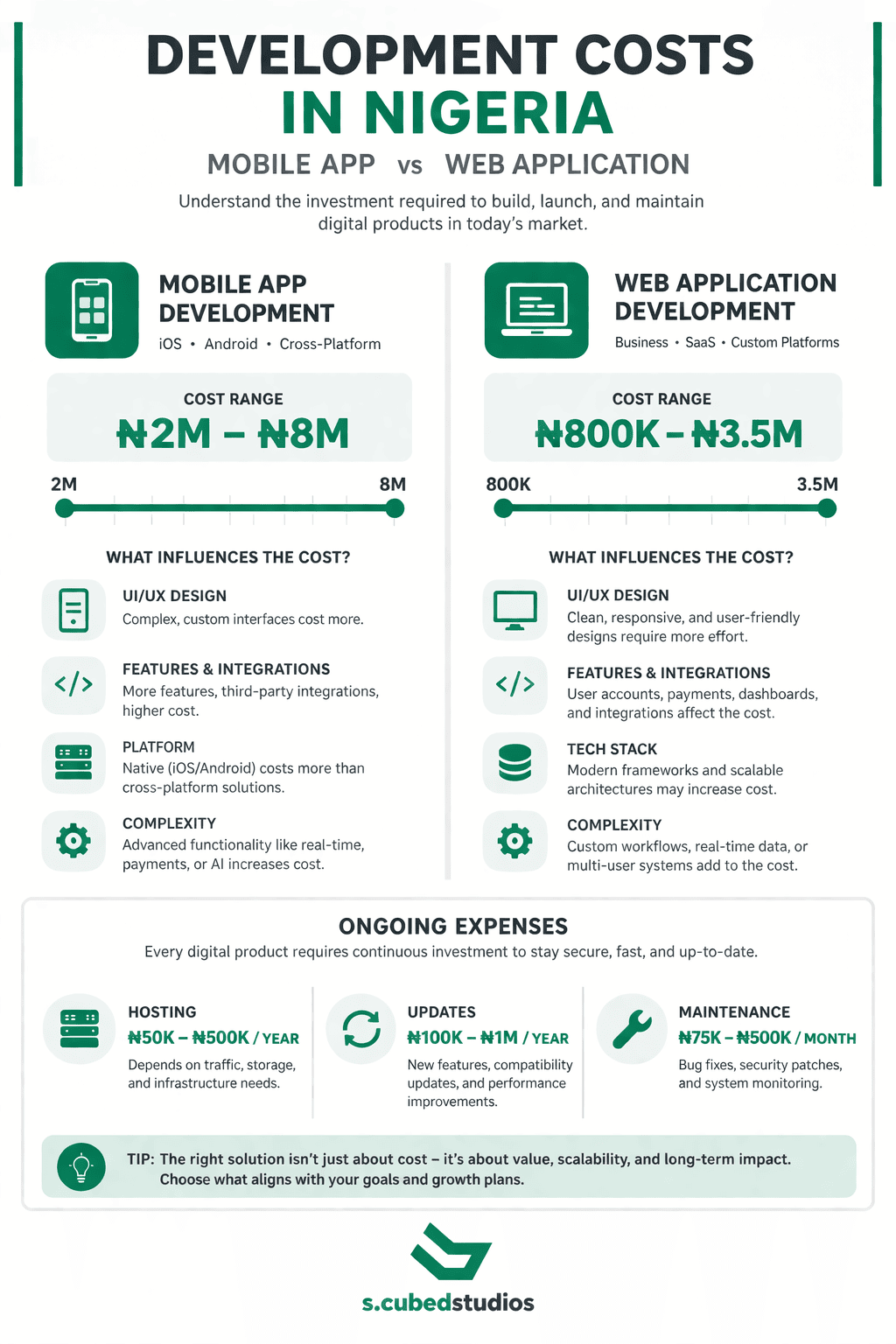
Mobile app development typically costs between ₦2,000,000 to ₦8,000,000 for a basic to medium complexity app, depending on features and developer expertise. This includes both Android and iOS versions. However, you’ll also face ongoing costs: app store fees (₦40,000 annually for Apple Developer Program), regular updates, and potential redesigns when mobile operating systems change.
Web app development usually ranges from ₦800,000 to ₦3,500,000 for similar functionality. The lower cost stems from building one solution that works everywhere, rather than separate versions for different platforms. Hosting costs are typically ₦50,000 to ₦200,000 annually, depending on traffic and features.
For Nigerian startups and SMEs, web apps often provide better return on investment initially. You can launch faster, test your concept with real users, and reinvest profits into a mobile app later if needed. Many successful Nigerian businesses like Paystack and Flutterwave started with web platforms before developing mobile apps.
Performance and User Experience in Nigeria’s Network Environment
Nigeria’s diverse network infrastructure significantly impacts how users experience mobile versus web apps. In major cities like Lagos, Abuja, and Port Harcourt, 4G coverage is generally reliable, making both options viable. However, in rural areas or during peak usage times, network speed can vary dramatically.
Mobile apps generally perform better on slower connections because much of the app code is stored locally on the device. Once downloaded, users can navigate between screens quickly, even on 2G networks. This is crucial for Nigerian businesses serving customers across different states with varying network quality.
Web apps depend entirely on internet connectivity for each interaction. However, modern web technologies like Progressive Web Apps (PWAs) bridge this gap by caching important content locally. Nigerian businesses can implement PWAs to get mobile app-like performance while maintaining web app flexibility.
Loading speed directly affects user retention in Nigeria’s mobile-first market. Nigerian users expect apps to load within 3 seconds, and each additional second of loading time can result in significant user abandonment. Mobile apps typically win this speed test, but well-optimised web apps can come close.
Understanding Your Nigerian Target Audience
Your target audience’s behaviour should heavily influence your decision. Nigerian millennials and Gen Z users are comfortable downloading apps, especially for services they use frequently, like banking, social media, or shopping. If your business requires daily interaction – like a fitness app, news platform, or financial service – mobile apps often provide better engagement.
However, Nigerian users are also selective about what they download. Limited storage space on budget smartphones and data cost concerns mean users typically only download apps they truly need. Your business must provide significant value to justify a download.
For services used occasionally or by diverse age groups, web apps often perform better. Nigerian users readily access web apps for one-time purchases, research, or infrequent services without commitment of device storage space.
Consider also that many Nigerian businesses serve both individual consumers and other businesses. B2B clients often prefer web apps accessed from desktop computers during work hours, while B2C customers might favour mobile apps for convenience.
Technical Infrastructure Requirements
The technical requirements for each option vary significantly, impacting your ongoing operational needs as a Nigerian business.
Mobile apps require specialised development skills and ongoing maintenance across multiple platforms. You’ll need developers familiar with Swift (iOS) and Kotlin/Java (Android), or cross-platform frameworks like React Native or Flutter. Finding skilled mobile developers in Nigeria is possible but typically costs more than web developers.
Web apps require more traditional web development skills – HTML, CSS, JavaScript, and backend technologies. Nigeria has a larger pool of web developers, potentially reducing costs and making it easier to find ongoing technical support.
Security considerations differ between platforms. Mobile apps can implement device-level security features like biometric authentication and secure storage, crucial for Nigerian fintech and banking applications. Web apps rely on browser security and HTTPS encryption, which is adequate for most business applications but may not meet requirements for highly sensitive data.
App store approval processes add complexity to mobile apps. Apple’s App Store and Google Play Store have specific guidelines that can delay launches or require redesigns. For Nigerian businesses needing to respond quickly to market opportunities, web apps provide more deployment flexibility.
Marketing and Discovery Strategies
How Nigerian customers will discover and engage with your app significantly impacts ROI. Mobile apps can leverage app store optimisation (ASO) to appear in search results when Nigerian users browse Google Play Store or Apple App Store. However, competition is fierce, and getting organic downloads requires significant ASO investment and often paid advertising.
Web apps benefit from search engine optimisation (SEO), allowing potential customers to discover your business through Google searches. When Nigerians search for “best food delivery in Lagos” or “online banking Nigeria,” your web app can appear in results. This organic discovery often provides better long-term value than app store marketing.
Social media integration works differently for each platform. Nigerian users frequently share web app links through WhatsApp, Instagram, and Twitter. These shared links work immediately for recipients. Mobile app sharing typically directs users to app stores, adding friction to the conversion process.
For Nigerian businesses, word-of-mouth marketing remains powerful. Web apps make it easier for satisfied customers to instantly share your service with friends and family through simple link sharing, crucial in Nigeria’s relationship-driven business culture.
Integration with Nigerian Business Operations
Consider how each option integrates with your existing business operations. Many Nigerian businesses rely on WhatsApp Business for customer communication, USSD codes for payments, and local payment gateways like Paystack or Flutterwave.
Mobile apps can integrate deeply with device features and local services. For example, a Nigerian delivery app can use GPS tracking, and camera for proof of delivery, and direct integration with local payment systems. These integrations often provide smoother user experiences for frequently used services.
Web apps excel at integrating with existing web-based business systems. If your Nigerian business already uses web-based inventory management, accounting software, or CRM systems, web apps can share data more easily. This integration reduces operational complexity and training requirements for staff.
For businesses serving both Nigerian and international markets, web apps provide easier localisation. You can display different languages, currencies, and content based on user location without maintaining separate app versions.
Data Usage and Connectivity Considerations
Data costs remain a significant consideration for many Nigerian users. While data prices have decreased, many customers still monitor usage carefully, especially outside major urban centres.
Mobile apps typically use less data after initial download because app logic runs locally. Users can navigate screens, view cached content, and perform basic functions with minimal data usage. This is particularly important for Nigerian businesses serving price-sensitive customers.
Web apps require data for every interaction, but modern optimisation techniques can minimise usage. Implementing progressive loading, image compression, and caching can make web apps data-efficient for Nigerian users.
Consider offering offline functionality regardless of your choice. Nigerian users appreciate apps that work during network outages or in areas with poor connectivity. Both mobile and web apps can implement offline capabilities, though mobile apps typically handle this more naturally.
Future-Proofing Your Digital Investment
Technology evolves rapidly, and your choice should consider future trends affecting Nigerian businesses. Progressive Web Apps (PWAs) are bridging the gap between web and mobile apps, offering mobile app-like experiences through browsers. Nigerian businesses can start with PWAs to test demand before investing in native mobile apps.
Cross-platform development frameworks like React Native and Flutter are making mobile app development more cost-effective for Nigerian businesses. These technologies allow building mobile apps that work on both Android and iOS from a single codebase, reducing development costs significantly.
Consider your long-term business goals. If you plan to expand across West Africa or internationally, web apps often provide easier scaling across different markets. Mobile apps require localization and potentially different versions for various markets.
Making the Decision: A Framework for Nigerian Businesses
Choose mobile apps if your Nigerian business meets these criteria:
- Customers need daily interaction with your service
- Your app requires device features like camera, GPS, or biometric authentication
- You serve tech-savvy Nigerian millennials and Gen Z users
- You can invest ₦2-8 million in initial development
- Your service benefits significantly from push notifications
- You’re building a platform for frequent, regular use
Choose web apps if your business fits these characteristics:
- Budget is limited (under ₦2 million for initial development)
- You need to launch quickly to test market demand
- Your customers use your service occasionally or for specific tasks
- You serve diverse age groups or B2B customers
- You want maximum device and platform compatibility
- SEO and organic discovery are important for customer acquisition
Successful Nigerian Examples
Several Nigerian businesses demonstrate successful implementation of both approaches:
Mobile App Success Stories:
- Kuda Bank leveraged mobile-first banking to attract young Nigerians
- Jumia’s mobile app dominates e-commerce with location-based features
- Bolt (formerly Taxify) uses GPS and real-time tracking for ride-hailing
Web App Success Stories:
- Paystack started as a web platform before expanding to mobile
- BudgIT uses web apps for transparent government data access
- Many Nigerian news platforms like Pulse and Legit prioritise web presence
Conclusion
The choice between mobile app and web app for your Nigerian business isn’t about which technology is superior—it’s about which aligns best with your customers’ needs, your budget, and your business goals.
For most Nigerian startups and SMEs, beginning with a well-designed web app provides the best balance of cost, reach, and flexibility. You can validate your business concept, build a customer base, and generate revenue while planning a future mobile app if data shows strong demand.
Consider starting with a Progressive Web App (PWA) that provides mobile app-like experiences through browsers. This approach gives you the best of both worlds while you gather user feedback and refine your offering.
Remember, this decision isn’t permanent. Many successful Nigerian businesses evolved their digital presence over time, starting with web apps and adding mobile apps as they grew. Focus on solving real problems for Nigerian users, and the right platform will become clear through user feedback and business metrics.
The Nigerian digital economy is growing rapidly, with increasing smartphone penetration and improving internet infrastructure. Whether you choose mobile or web apps, success depends more on understanding your Nigerian customers’ needs and delivering genuine value than on the technology platform itself.
by Yomi Ashiru | Mar 31, 2026 | Digital Marketing, SEO, Social Media
Running a small business in Nigeria often feels like a constant juggling act, and marketing can seem like an expensive luxury you can’t afford. We hear this concern almost daily at s.cubedstudios limited, where we’ve been helping Nigerian businesses navigate the digital landscape since 2010. The truth is, some of the most effective marketing strategies don’t require deep pockets – they require smart thinking and consistent execution, especially in our dynamic Nigerian market.
Your Website: The Foundation of Everything
Every successful digital marketing strategy starts with a solid foundation, and that foundation is your website. Think of your website as your most dedicated employee – it’s working for you 24/7, never takes a sick day, and doesn’t ask for a salary increase. However, like any employee, it needs to be properly equipped to do its job effectively.
The mobile revolution isn’t coming to Nigeria – it’s already here. With over 120 million internet users in Nigeria accessing the web primarily through smartphones, your website absolutely must deliver a flawless mobile experience. This isn’t just about looking good on smaller screens; it’s about functionality, speed, and ease of use despite varying internet speeds across Lagos, Abuja, and other Nigerian cities. Google has made mobile-friendliness a ranking factor, so optimizing for mobile devices improves your search visibility without spending a single naira on advertising.
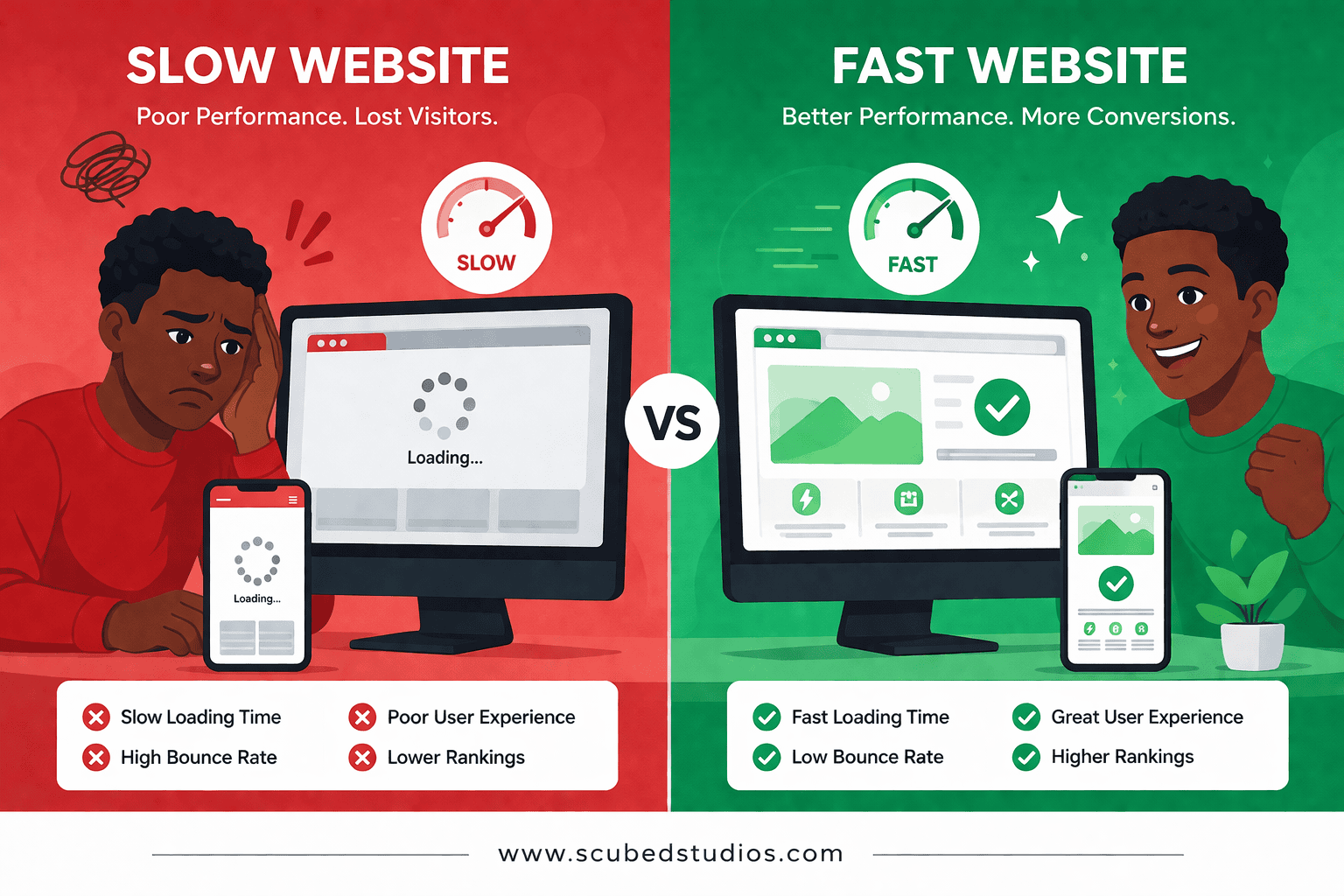
Speed is another critical factor that many Nigerian businesses overlook, especially considering internet connectivity challenges. Research shows that a one-second delay in page loading can reduce conversions by 7%. That might not sound like much, but for a small business operating in Nigeria’s competitive market, every conversion counts. The good news is that improving site speed often involves simple fixes that don’t require technical expertise or significant investment in naira.
Your website should also guide visitors naturally toward taking action. Whether you want them to call, WhatsApp, or make a purchase, every page should make the next step crystal clear. Think about the customer journey and remove any friction that might prevent someone from becoming a customer in the Nigerian context.
Content Marketing: Building Relationships Through Value
Content marketing has become the great equalizer in digital marketing, particularly relevant for Nigerian businesses competing with international companies. Large corporations with massive budgets can’t necessarily create better content than a passionate Nigerian business owner who truly understands their local customers’ needs. This strategy costs 62% less than traditional marketing while generating three times more leads, making it perfect for budget-conscious Nigerian businesses.
The key to successful content marketing isn’t posting every day – it’s posting valuable content consistently that resonates with Nigerian audiences. Focus on creating weekly content that genuinely helps your audience solve problems or learn something new about navigating business in Nigeria. When you understand what Nigerian customers are searching for online, you can create content that naturally attracts them to your business.
Smart Nigerian businesses also understand the power of repurposing content across multiple platforms popular in Nigeria. A single well-researched blog post can become the foundation for weeks of social media content across WhatsApp Status, Instagram, LinkedIn, and even video content for YouTube. This approach maximizes your return on the time invested in content creation while ensuring your message reaches Nigerians across different platforms and formats.
Encouraging your customers to create content for you represents one of the most cost-effective marketing strategies available to Nigerian businesses. When satisfied customers share photos of your products on Instagram, write reviews on Google My Business, or recommend your services in WhatsApp groups, they’re providing authentic marketing that money can’t buy. This user-generated content builds trust with potential Nigerian customers because people trust recommendations from other Nigerians more than traditional advertising.
Strategic Social Media: Focus and Consistency Win
The biggest mistake Nigerian small businesses make on social media is trying to be everywhere at once. Instead of spreading yourself thin across every platform, choose two or three where your ideal Nigerian customers are most active and focus on doing those well.
Instagram and WhatsApp dominate social media usage among Nigerian consumers, making them essential platforms for most businesses. Instagram allows you to showcase your products and services with high-quality visuals that appeal to Nigeria’s increasingly sophisticated consumers. The platform’s Stories feature provides perfect opportunities for real-time engagement and can showcase your company culture in authentic ways that resonate with Nigerian audiences.
WhatsApp Business has become incredibly powerful for Nigerian businesses because of its widespread adoption across all demographic groups. The platform enables direct communication with customers, allows you to share product catalogues, and facilitates customer service in ways that Nigerian consumers prefer. Many successful Nigerian businesses use WhatsApp Status to share daily updates, promotions, and behind-the-scenes content.
LinkedIn has evolved beyond a simple networking platform to become essential for business-to-business marketing in Nigeria’s growing professional landscape. Sharing insights about doing business in Nigeria and professional tips positions you as an expert in your field, while meaningful engagement with other Nigerian professionals expands your network. The platform’s publishing features allow you to share longer-form content that demonstrates your expertise to potential clients across Lagos, Abuja, and other major Nigerian business centres.
Facebook remains relevant for certain Nigerian demographics and offers excellent targeting options for local businesses. The platform allows you to join Lagos business groups, Abuja entrepreneur networks, or industry-specific Nigerian communities where you can provide helpful advice and build relationships. Facebook Events can promote workshops, sales, or special offerings to your local Nigerian community.
Email Marketing: The Channel That Keeps Giving
Despite the rise of WhatsApp and other messaging platforms, email marketing continues to deliver exceptional returns for Nigerian businesses, generating approximately ₦42 for every naira spent. This makes it particularly attractive for small businesses operating on tight budgets in Nigeria’s challenging economic environment.
Building an email list organically requires offering something of genuine value in exchange for contact information. For Nigerian audiences, this could be a helpful guide about navigating local regulations, industry reports specific to the Nigerian market, business checklists, or exclusive discounts. The key is ensuring that what you’re offering genuinely solves problems that Nigerian customers face daily.
Not every subscriber has the same needs or interests, which is why smart email marketing involves segmenting your list by location (Lagos vs. Abuja vs. other states), business size, or industry focus. A new subscriber might need educational content about your industry’s landscape in Nigeria, while past customers might be more interested in new products or services. By sending targeted messages to specific segments, you’ll see higher open rates, better engagement, and ultimately more sales in naira.
Email automation transforms this marketing channel from time-consuming to practically hands-off. Welcome email sequences can introduce new subscribers to your Nigerian business and build relationships over time. Follow-up emails after purchases can encourage Google reviews, suggest related products, or simply thank customers for their business in ways that respect Nigerian cultural values.
Local SEO: Owning Your Nigerian Market
For businesses serving Nigerian customers, local search engine optimisation provides some of the best returns on marketing investment. When someone searches for services “near me” in Lagos or includes “Abuja” in their search, you want to be the first Nigerian business they see.
Your Google Business Profile acts as a mini-website that appears prominently in local search results across Nigerian cities. Completing every section of this profile with accurate information, high-quality photos of your Lagos or Abuja location, and regular updates signals to Google that your Nigerian business is active and legitimate. Customer reviews on this platform carry significant weight in local search rankings, so actively encouraging satisfied customers to leave reviews becomes part of your SEO strategy.
Consistency across online directories strengthens your local SEO efforts in Nigeria. Ensuring your business name, address, and phone number appear identically across all platforms helps search engines understand and trust your Nigerian business information. Many local directories like Vconnect, Jumia, and others allow free listings, making this a cost-effective way to improve online visibility across Nigerian markets.
Leveraging Nigerian-Specific Opportunities
Nigerian businesses have unique advantages in digital marketing that international companies can’t replicate. Your understanding of local languages, cultural nuances, and consumer behaviour gives you an edge that no foreign competitor can match. Whether you’re incorporating Pidgin English in your social media posts or understanding the cultural significance of certain colours and symbols, these local insights can make your marketing more effective.
Consider partnering with Nigerian influencers who genuinely use and love your products or services. Micro-influencers with 1,000 to 10,000 followers often have higher engagement rates and charge reasonable fees in naira, making them perfect for small business collaborations.
Making It All Work Together
The most successful Nigerian small business marketing strategies integrate these elements rather than treating them as separate initiatives. Your website content becomes WhatsApp Status updates and Instagram posts. Social media engagement drives email signups. Email campaigns direct traffic back to your website. Local SEO efforts support all online marketing activities by improving overall search visibility across Nigerian cities.
Success in budget-friendly digital marketing comes down to consistency, patience, and continuous learning about the evolving Nigerian digital landscape. Start with one or two strategies that align with your strengths and gradually expand as you see results. Remember, every large Nigerian business started small, and many of today’s success stories began with entrepreneurs who had more creativity than capital.
At s.cubedstudios limited, based right here in Lagos, we’ve seen countless Nigerian small businesses achieve remarkable growth using these exact strategies. Our team of Nigerian digital marketing professionals understands the unique challenges and opportunities that come with marketing in Nigeria’s dynamic economy. From dealing with inconsistent internet connectivity to understanding local consumer behaviour patterns, we’ve helped businesses across Lagos, Abuja, Port Harcourt, and other Nigerian cities compete effectively in the digital space.
The digital world offers unprecedented opportunities for Nigerian small businesses to compete with much larger companies, both local and international. You just need to be smart about how you approach it, understanding that Nigerian consumers have specific preferences and behaviours that differ from global markets.
Budget-Friendly Tools for Nigerian Businesses
Getting started doesn’t require expensive software or tools. Many effective digital marketing tools offer free versions perfect for small Nigerian businesses:
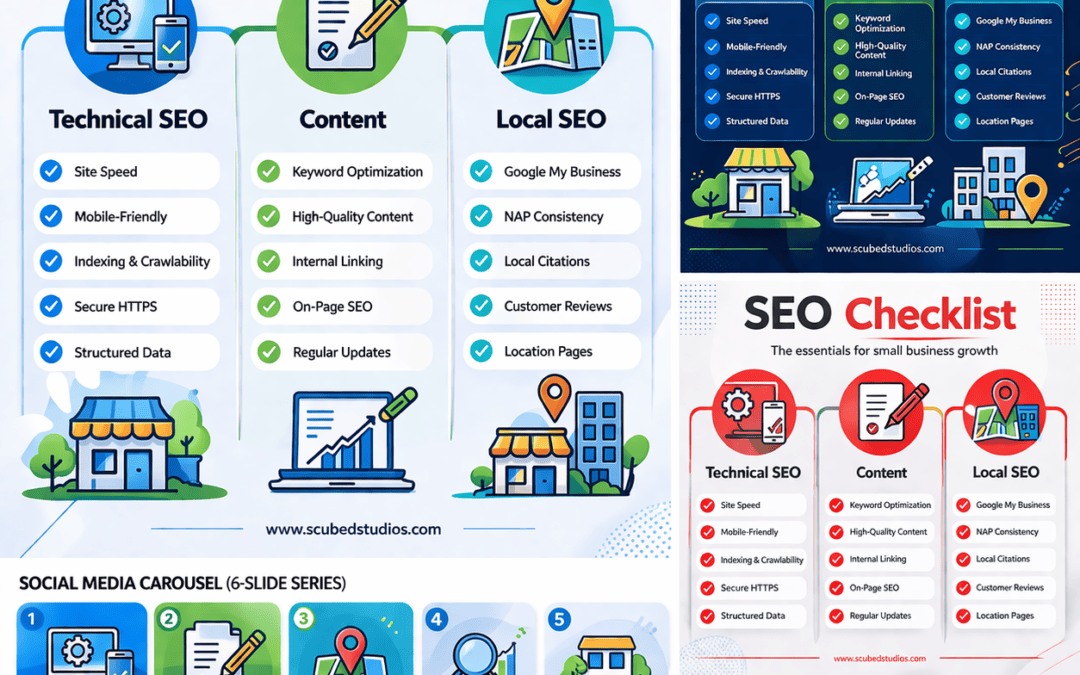
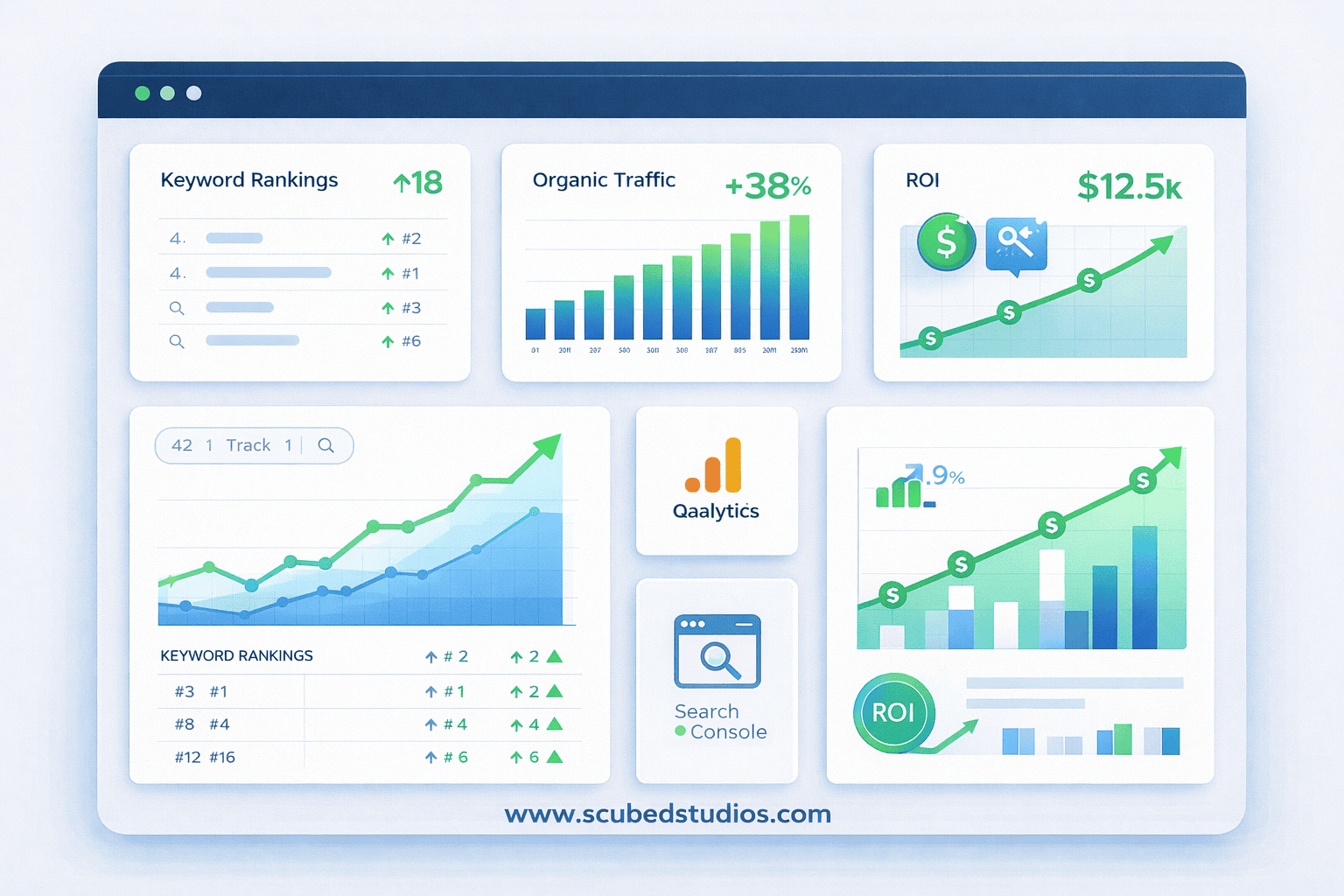
- Google Analytics and Google Search Console help you understand your website traffic and search performance at no cost
- Canva provides professional design templates for social media posts, with many free options
- Mailchimp offers free email marketing for up to 2,000 contacts
- Hootsuite or Buffer allow you to schedule social media posts across multiple platforms
- Google My Business is completely free and essential for local Nigerian businesses
Measuring Success in the Nigerian Market
Track metrics that actually matter to your Nigerian business. Website traffic is nice, but what really counts is how many visitors become customers paying in naira. Monitor your email open rates, social media engagement from Nigerian followers, and most importantly, how your digital marketing efforts translate into actual sales and revenue growth.
Set realistic expectations based on the Nigerian market context. Building a strong digital presence takes time, especially when competing for attention in Nigeria’s busy digital landscape. Focus on consistent progress rather than overnight success.
Common Mistakes Nigerian Businesses Should Avoid
Many Nigerian businesses make the mistake of copying international marketing strategies without adapting them to local preferences. What works in the US or UK might not resonate with Nigerian consumers. Always consider cultural context, local events, and Nigerian holidays when planning your marketing calendar.
Another common error is neglecting mobile optimisation despite knowing that most Nigerian internet users access the web via smartphones. Your entire digital strategy should prioritise mobile experience, from website design to social media content format.
Looking Forward
Nigeria’s digital economy continues to grow rapidly, creating new opportunities for savvy small business owners. E-commerce is expanding, digital payment systems are becoming more widespread, and internet penetration continues to increase across all Nigerian states.
The businesses that start building their digital presence now will be best positioned to benefit from Nigeria’s continued digital transformation. Whether you’re based in Lagos Island, Victoria Island, Mainland Lagos, or anywhere across Nigeria, these strategies can help you grow your business without breaking the bank.
Ready to transform your Nigerian business’s digital marketing? Start with one strategy today, execute it consistently with Nigerian audiences in mind, and watch your business grow.
At s.cubedstudios limited, we’re proud to help Nigerian entrepreneurs and small businesses navigate the digital marketing landscape. Our Lagos-based team combines international best practices with a deep understanding of the Nigerian market to deliver results that matter – more customers and more revenue in naira.









Recent Comments