
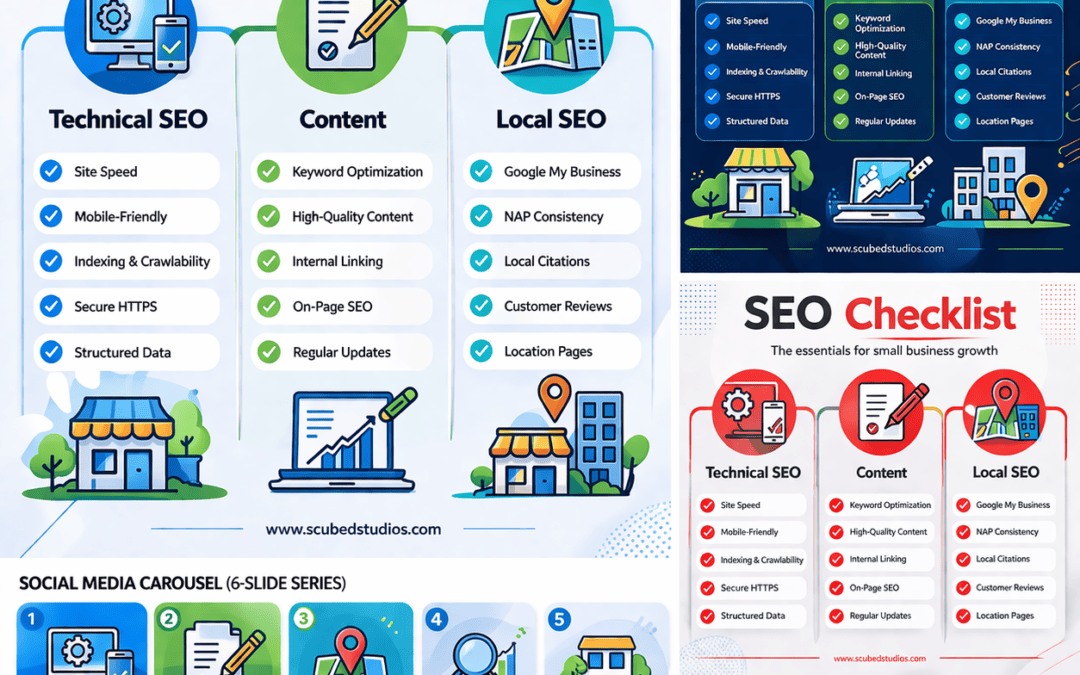
As a small business owner scrolling through LinkedIn or Facebook, you've likely wondered why your competitors appear first on Google whilst your brilliant business remains buried on page three. The answer isn't magic, it's strategic SEO implementation that drives real results.
With over 8.5 billion searches happening daily on Google, small businesses that master SEO fundamentals consistently outperform those that don't. This comprehensive checklist will transform your online visibility, whether you're a Manchester consultancy or a Birmingham bakery.
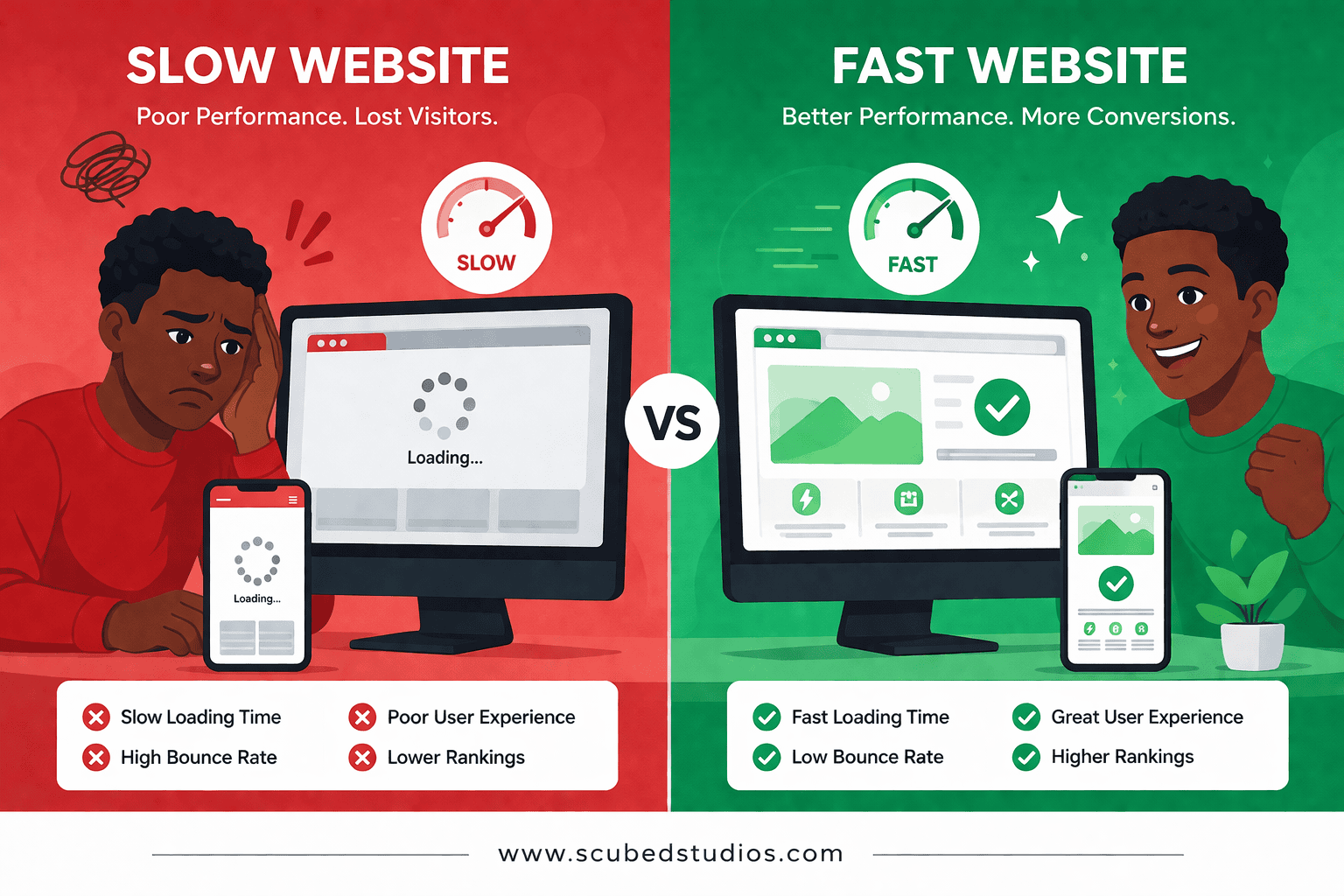 Slow vs fast website performance comparison
Foundation: Technical SEO Essentials
Website Speed Optimisation: Your website must load within three seconds or risk losing 40% of visitors before they see your content. Use Google PageSpeed Insights to identify speed issues. Compress images, enable browser caching, and choose reliable hosting. Small businesses often overlook this, but it's crucial for both user experience and search rankings.
Mobile-First Design: With 60% of searches happening on mobile devices, Google now prioritises mobile-friendly websites. Test your site using Google's Mobile-Friendly Test tool. Ensure buttons are easily clickable, text is readable without zooming, and navigation works smoothly on smartphones.
SSL Certificate Installation: Google marks non-HTTPS websites as "not secure," damaging user trust and rankings. Installing an SSL certificate is often free through hosting providers and immediately improves your search engine credibility.
XML Sitemap Creation: Submit an XML sitemap to Google Search Console to help search engines understand your website structure. This simple step ensures all your important pages get indexed properly, improving overall visibility.
Keyword Research and Content Strategy
Local Keyword Targeting: Small businesses thrive on local search. Instead of targeting "accounting services," focus on "accounting services Birmingham" or "chartered accountants near me." Use Google Keyword Planner and Answer the Public to discover what your local customers actually search for.
Long-Tail Keyword Implementation: Target specific phrases your customers use. "Best Italian restaurant delivery London" converts better than just "restaurant" because it captures intent. Long-tail keywords face less competition and attract more qualified traffic.
Content Cluster Creation: Build topic clusters around your main services. If you're a digital marketing agency, create content covering social media marketing, PPC advertising, and content creation, all linking back to your main service pages. This demonstrates expertise and improves rankings across related searches.
Regular Content Publishing: Consistent, valuable content signals to Google that your website is active and authoritative. Aim for weekly blog posts addressing customer questions, industry updates, or helpful guides. Quality trumps quantity—one excellent article monthly outperforms four mediocre ones.
On-Page SEO Optimisation
Title Tag Excellence Craft compelling title tags under 60 characters that include your target keyword and location. "Best Plumbing Services Manchester | 24/7 Emergency Repairs" works better than "Welcome to Our Website."
Meta Description Mastery Write persuasive meta descriptions between 150-160 characters that encourage clicks. Include your main keyword and a clear value proposition. Think of it as your Google advertisement—make it compelling.
Header Structure Optimisation: Use H1 tags for page titles, H2 for main sections, and H3 for subsections. This hierarchy helps Google understand your content structure whilst improving readability for users.
Internal Linking Strategy: Link related pages within your website to distribute page authority and help users discover more content. When writing about "home security systems," link to your "security camera installation" service page naturally within the content.
Image Optimisation Name image files descriptively (birmingham-office-cleaning.jpg instead of IMG_001.jpg) and include alt text for accessibility and SEO. Compress images to maintain fast loading speeds whilst preserving quality.
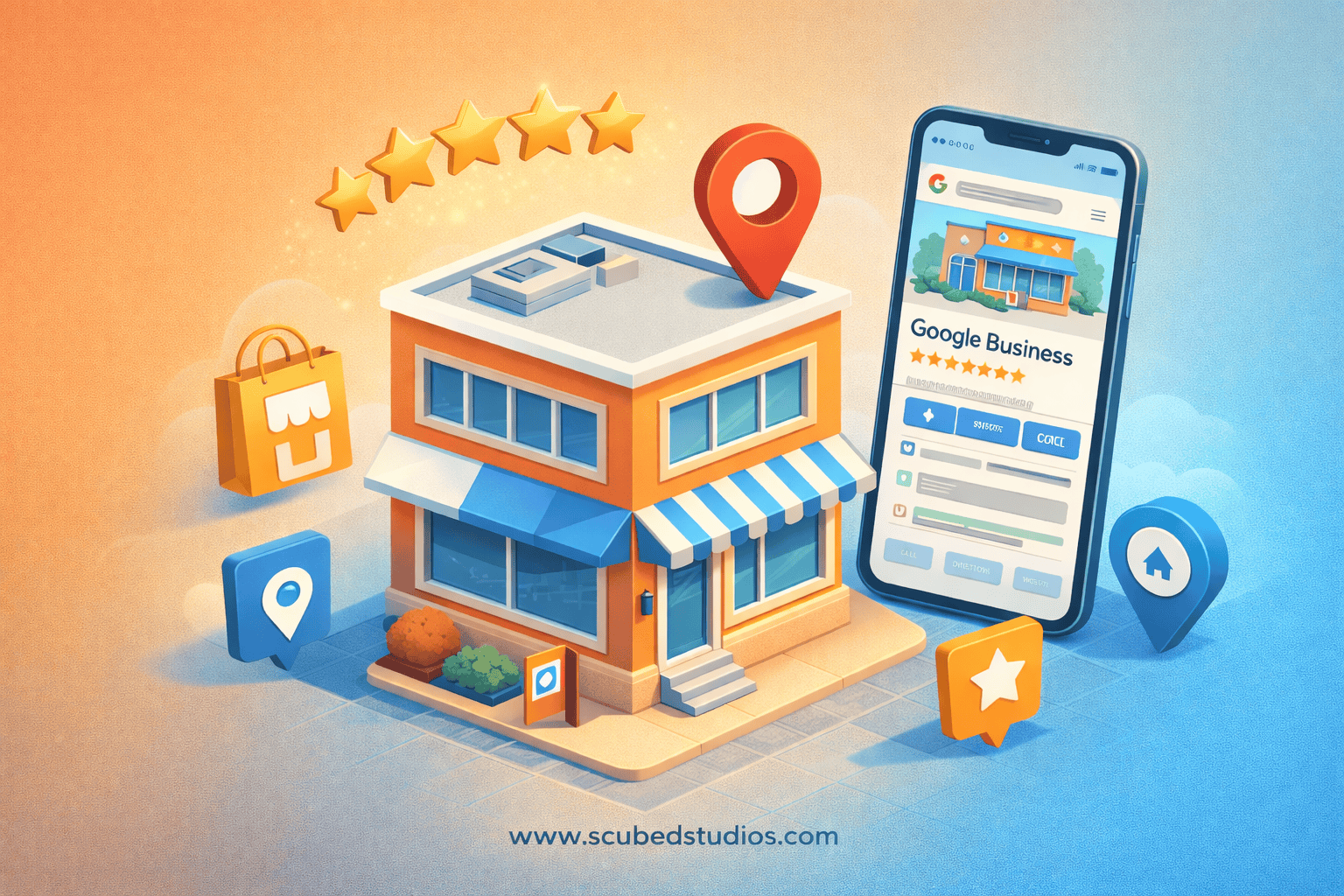 Local business success in digital space
Local SEO Domination
Google Business Profile Optimisation Claim and optimise your Google Business Profile completely. Add accurate business information, high-quality photos, regular posts, and respond to all reviews. This free tool significantly impacts local search visibility.
NAP Consistency: Ensure your Name, Address, and Phone number match exactly across all online directories, your website, and social media profiles. Inconsistencies confuse search engines and weaken local rankings.
Local Directory Listings: Submit your business to relevant local directories like Yelp, Yellow Pages, and industry-specific platforms. Quality directories provide valuable backlinks and increase local visibility.
Customer Review Management: Actively encourage satisfied customers to leave Google reviews and respond professionally to all feedback. Positive reviews improve rankings whilst demonstrating excellent customer service to potential clients browsing your profiles on LinkedIn or Facebook.
Location Pages Creation. If you serve multiple areas, create dedicated pages for each location with unique content, local keywords, and area-specific information. This helps you rank for searches in different cities or neighbourhoods.
Link Building and Authority Development
Quality Backlink Acquisition: Focus on earning links from reputable local businesses, industry publications, and relevant websites. Guest posting on industry blogs, sponsoring local events, or partnering with complementary businesses creates valuable link opportunities.
Social Media Integration: Maintain active profiles on LinkedIn and Facebook, sharing valuable content that encourages engagement and links back to your website. Social signals indirectly influence search rankings whilst building brand awareness.
Local Networking for Links: Join local business associations, chambers of commerce, and industry groups. These organisations often provide member directory listings with valuable local backlinks.
Technical Monitoring and Maintenance
Google Search Console Setup: Monitor your website's search performance, identify crawl errors, and track keyword rankings. This free tool provides invaluable insights into how Google sees your website.
Regular SEO Audits: Conduct monthly reviews of your website's SEO health. Check for broken links, missing meta descriptions, and technical issues that could impact rankings. Many problems are easily fixable once identified.
Analytics Tracking Use Google Analytics to understand which content drives traffic, conversions, and engagement. This data guides future SEO strategies and content creation efforts.
Competitor Analysis: Regularly analyse competitors' SEO strategies using tools like Ubersuggest or SEMrush free versions. Identify keyword opportunities, content gaps, and link-building possibilities in your market.
Advanced SEO Strategies for Small Businesses
Schema Markup Implementation: Add structured data to help search engines understand your content better. Local business schema, review schema, and FAQ schema can enhance your search result appearances with rich snippets.
Voice Search Optimisation: Optimise for voice searches by targeting conversational keywords and question phrases. "Where's the best fish and chips near me?" represents how people use voice search differently from typed queries.
Video Content Integration: Create valuable video content addressing customer questions or demonstrating services. Videos increase engagement time and can rank in both Google search and YouTube results, expanding your visibility.
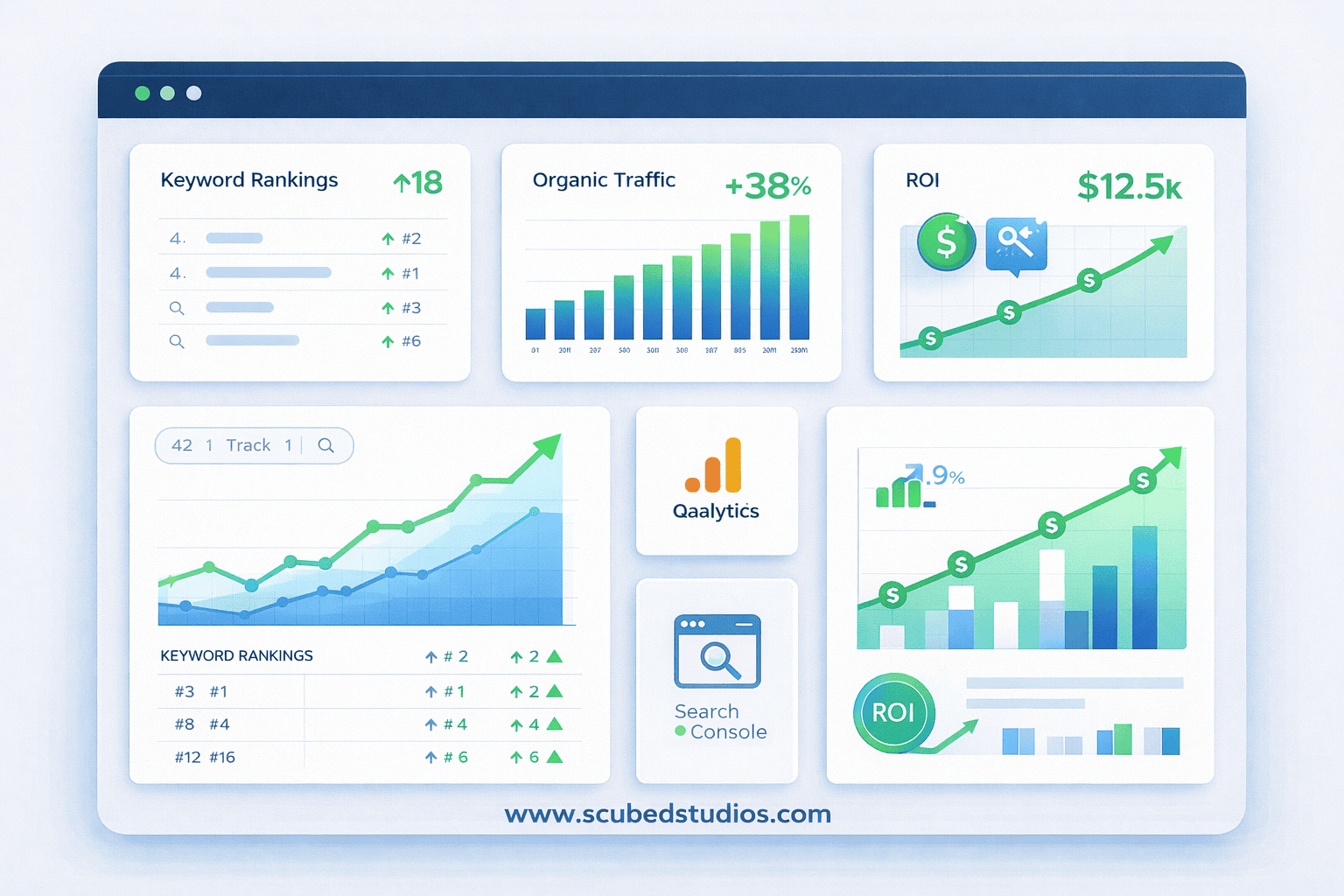
 SEO performance dashboard
Measuring Success and ROI
Key Performance Indicators: Track organic traffic growth, keyword ranking improvements, local search visibility, and most importantly, leads and conversions from organic search. SEO success means business growth, not just higher rankings.
Monthly Reporting Document progress monthly to maintain momentum and identify areas needing attention. Track metrics that matter to your business goals rather than vanity metrics.
Common SEO Mistakes to Avoid
- Keyword stuffing that makes content unreadable
- Ignoring local SEO opportunities
- Focusing solely on search engines instead of user experience
- Expecting overnight results from SEO efforts
- Neglecting mobile optimisation
- Buying low-quality backlinks that can harm rankings
Quick Implementation Timeline
Week 1-2: Technical SEO audit and fixes Week 3-4: Keyword research and content planning Month 2: On-page optimisation and local SEO setup Month 3+: Content creation and link building Ongoing: Monitoring, analysis, and continuous improvement
Conclusion
Effective SEO for small businesses isn't about complex technical wizardry—it's about consistent implementation of proven fundamentals. Start with technical basics, optimise for local search, create valuable content, and monitor progress regularly.
Remember, SEO is a marathon, not a sprint. Small businesses that commit to this checklist and implement strategies consistently see significant improvements within 3-6 months. The investment in time and effort pays dividends through increased visibility, more qualified leads, and sustainable business growth.
Whether you're sharing this knowledge with your LinkedIn network or Facebook business community, remember that every small business can compete effectively in search results with the right strategy and consistent execution.
Recent Comments