
insert_pixel_code_here(Facebook Pixel code)
12 Awesome Brand Awareness Strategies

12 Awesome Brand Awareness Strategies

12 Awesome Brand Awareness Strategies


Standing out as a brand is a prerequisite to survival in today's competitive world. And learning how to promote your brand awareness is never going to hurt but help you. So, relax and enjoy this post.

These 12 awesome brand awareness strategies would help

1. Great content less ache: If you want to be known as a lady's man, you need to dress appropriately, respectful, smell nice and strike engaging conversations. With these, the ladies could put you in a beautiful problem. So is having great content for your brands, just that it is not expected to put you in any type of problem. Create memorable, valuable content and you’ll be introduced to new audiences and make a lasting impression.

2. Freebies: No one is immune to enjoying free things. Put your brand name on items and give away those items at an event relevant to your brand's customers.

3. Social Media Contests: Run a social media contest in which contestants submit answers to questions pertaining to your services or business. Contestants will share the link with friends and family to get more votes, building your brand awareness as a result. Such exercise builds a friendly relationship with customers.

4. Unique Identity: One surefire way to increase brand awareness is by giving your brand a fun, unique brand identity. Since acting like every other brand could be boring.

5. Paid Social Advertising: Organic social marketing is becoming more difficult by the day, leading more businesses to turn to paid social advertising. Whether this difficulty is deliberate or not is not an issue to be addressed now. Facebook and Twitter Ads are relatively cheap and help get your brand seen on social. Whether or not users convert immediately, every added piece of familiarity counts when users finally are ready to make a purchase.

6.Influencer Marketing: Getting friends in high places is another easy way to boost your brand awareness. Find existing influencers in your industry whose business you could potentially complement, rather than compete with. Make use of your partner’s influencer network to promote your brand (while also building up valuable partnerships you can continue to make use of long-term).

7. Community Involvement: Bring your marketing close to home by getting involved in your community. Sponsor local events, get involved with local schools, and host your own events to make yourself a household name.

8. Search Engine Optimization (SEO): Obviously, a huge part of your brand awareness strategy is getting found by people who are looking for a product like yours. SEO is essential to this effort. Make sure your site uses relevant keywords, title tags, alternative image text, and meta data to improve where you rank.

9.Create a Blog: Most brands have a blog, but the ones that stand out in buyer’s minds have blogs with content that informs, entertains, and educates. Blogging is an important part of any inbound marketing strategy. Consistency and quality are key.

10.Referals!!!: People trust information that comes from acquaintances, peers, friends and family members more than any other source. This makes word-of-mouth one of the most powerful weapons in your arsenal. Some ways to get referrals are: offer outstanding services to customers, incentivize the acts of referrals, testimonials

11. Daily Social Media Posting: You don't have to write a novel every day, but visitors should be able to look at your social media profiles and know you're in business. Plus, the more valuable content you post, the higher the chance of a follower sharing your content.

12. Hashtags: You can reach a bunch of strangers with hashtags on Facebook, Twitter, Instagram, and Pinterest. By placing a hashtag in your post (#likethis), users can click/search for those tags to find similar posts. #tbt (thank God is Friday) is a very popular tag that you can use on Fridays to increase brand awareness.

You should make sure you do not just practice this strategies but consistently and diligently too.


SOURCES

https://www.protocol80.com/blog/25-ways-to-increase-brand-awareness-inbound-marketing
https://www.wordstream.com/blog/ws/2015/07/10/brand-awareness
https://blog.trendkite.com/trendkite-blog/top-13-brand-awareness-strategies-with-impact?fbclid=IwAR1cTR9B7JKsSZqv55teEVXxDlvE9WGeeGnzwHENqD4MVjhogGWfZMLDOdI
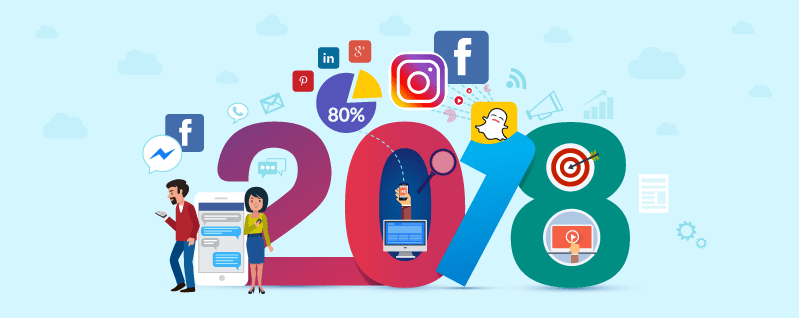
 

Social Media Changes in 2018

Social Media Changes in 2018

So last year in the social media world was a bit mad. There were so many big changes that left one's head spinning. Here are just a few that we noticed.

#1: User lost confidence in Facebook as a whole last year. From issues with Cambridge Analytica, combined with the non-stop negative press about how Facebook used your profile data, prompted a lot of people to find new places to hang out online.

#2: Twitter cracked down on automation. If this has been part of your plan, that's a strategy that's no longer working as Twitter cleaned up its user experience. And deleted many suspect accounts.

#3: Facebook reduced the reach of all content. In an effort to refocus its users on meaningful conversations, FaceBook essentially halted most organic reach. Goodbye traffic!

#4: Instagram launched IGTV. In an attempt to create an alternative to YouTube, they created a new long-form vertical video platform.

#5: YouTube rolled out Stories. Not wanting to be left behind, they decided to become "Instagram-like."

#6: Facebook overhauled groups. Adding Watch Parties, analytics, and badges for active users, FB went all-in on this product.

#7: LinkedIn revamped groups. This Microsoft-owned platform decided to overhaul its groups product to appeal to more users.

And let's also not forget the global rollout of FB Watch, new ads formats (think Stories ads and ThruPlay), and GDPR...
There's a pretty good chance your strategies have been thrown out the window. The only constant in our industry is change. Industry analysts expect 2019 to be a breakout year for innovation as the social platforms shake off the GDPR changes and focus on competitive differentiation.

Responsibilities of a Social Media Manager

Responsibilities of a Social Media Manager

Responsibilities of a Social Media Manager

With the development in the technology world in the twenty-first century, new job opportunities that no one would have imagined decades ago, have been created. Thanks to the Internet and app developers, those skilled in digital marketing, search engine optimization, social media management, content marketing etc, are now the belles of the ball. But among all these, the hottest demand is for a social media manager.

Being a social media manager is not limited only to the management of a company or an organization’s social media platforms. Social media managers are responsible for developing and implementing marketing strategies for businesses’ social media sites. A social media manager is a marketer, brand manager and to an extent, a public relations personnel. He/She creates and implements a social media plan which involves; brand development, identifying the target market, setting clear objectives/realistic goals, visual design and web development strategy, content marketing strategy, promotion strategy, engagement strategy, conversion, and measurement & analysis to establish ROI.


As a social media manager, you should be skilled in:

  • Graphic design: ability to use photoshop, text editing, PowerPoint, and excel
  • Excellent written and oral communication skill
  • Knowledge of HTML and website management
  • must be familiar with web analytics tools and ability to use it.
  • must be familiar with social media platforms and their tools
  • familiar with managing blogs, discussion forums, ratings and reviews
  • must be able to manage a computer both Mac and PC.
  • knowledge of marketing and brand management
  • content writing and development
  • familiar with different advertising systems and paid promotion
  • knowledge of ROI analysis, conversions, and social media key performance indicators.
  • SEO and SEM knowledge.
  • must be open minded and ready to learn

The following include some of the responsibilities of a social media manager:

  1. developing relevant contents topics for target customers or audience
  2. managing publish content
  3. monitoring, listening and responding to users in a social way (customer service)
  4. Promoting brand products and services via social media channels
  5. develop and expand community/influence outreach efforts via social media
  6. design, create and manage promotions and social ad campaigns.
  7. manage efforts in building online reviews and reputation.
  8. analyze key performance indicators and modify strategies if required
  9. compile reports for management showing Returns on Investment


How to Write Long-Form Content

How to Write Long-Form Content

How to Write Long-Form Content

Writing long-form content is a confusing and if we’re being totally honest, a pain in the ass process especially if you don’t know where to start or how to go about it. To help you tell your story from beginning to end and make absolute sense, here’s how to write long-form content.

Create an outline

Creating an outline will help to keep you on track from the start and give you some direction when you’re feeling lost as the actual writing process plays out. Your outline should act as a road map that walks you through each section of your piece and ensures that nothing important is overlooked.

Brainstorm bullet points

So, your outline is done and dusted. Now, you need to think up a set of bullet points for each section of your content that highlight the most important pieces of information you want your readers to learn. Once you’ve built upon your bulleted lists, you may find that some of the other parts of your outline aren’t any longer needed. On the other hand, you might find that your content needs more in-depth information than initially planned.

Plan your format

While you’re creating your content, think about how you want to present it to your readers. If your content includes a lot of statistics or historical information, you may want to lead each section with a stunning photo or short educational video that makes your audience want to read the content to the end.

Eliminate all redundancies

After you’ve created your outline and your bulleted ideas, read through everything and weed out any ideas that overlap each other by combining them in some way. This will allow you to minimise the inclusion of redundancies and ensure that every piece of content you do include is relevant to the overall topic at hand.

In conclusion, it is important to research your target audience and put yourself in their shoes during your planning session. Read competitor blogs and check out consumer or company forums to gain some insight into what your potential readers expect to learn when reading your content.


AI IN DIGITAL MARKETING: A RISK?

AI IN DIGITAL MARKETING: A RISK?

AI IN DIGITAL MARKETING: A RISK?

AI short for Artificial intelligence, a well-known term without a solid definition and a popular expression in innovation that has everybody sitting up to focus. Nils J Nilsson, an establishing scientist in the field, defines it as “that movement dedicated to making machines keen, and insight is that quality that empowers an element to work suitably and with prescience in its environment”.

In Digital Marketing, promoting is a center part of advanced showcasing. With a rise in AI popularity, anyone in the field of substance or computerized showcasing can be a tad worried by the likelihood of machines gobbling up the occupations of human writers. Is the risk genuine?

Picture this. You wake up one day and find that the production of content has suddenly turned into the duty of a machine and not a human. It is imperative to discover a response to this question particularly when advertisers and journalists are such a great amount of stressed over their employments, spending plans, and methodologies in the wake of expanding mechanisation.

Gartner, an American research and admonitory firm, anticipated that 20% of all the business will be created by machines by the year 2018. Notwithstanding, they likewise added that it is material to formal archives, reports, white papers, public statements, and other formal business. It unmistakably implied that it didn’t have any significant bearing to experimental writing, where human feelings, basic considering, examination and imagination are required.

Content creation is relevant to the tedious, manual and exhausting occupations. It is very normal as people can’t satisfy the request of delivering high volumes of such information, where an abnormal state of precision, reiteration, and information section is required.

Creation that requires unique thoughts and innovative believing is more averse to be in danger because of composing robots. Would you be able to envision a machine producing with incredible thoughts and that can be devoured by the cognizant customer?

It is better to infer that digital marketing is in a condition of transition. The truth will surface eventually whether it will be overwhelmed by artificial intelligence or not.

Awesome Social Media Content as Easy as Pie

Awesome Social Media Content as Easy as Pie

Awesome Social Media Content as Easy as Pie

Social media keeps on changing and evolving daily so in other to remain at the total one must change, learn, and adapt to the new technologies and platforms used in achieving social media ROI. Though content is KING, what kind of content gets you the kingdom? With practice and time creating awesome social media content becomes easy with the basics listed below.

Images

Today images are the cornerstone of social media, which is way social media platforms like Instagram, Pinterest and Flickr are so popular today. They all offer image based posts which is quicker to aborb  than a full length written post. No one has time for that especially someone in the rat race who only has a minute or 2 to catch up with their social network.

Remember, when choosing an image, you have to decide which social media network you want to post them on. What may work on Facebook may not on Pinterest. And each social media network has specific size and layout. Funny and eye catching images are great. You can also use infographic images for your business as well.

Video

If you are not using videos in your marketing, you are missing a very, very valuable piece of content. With videos, you can connect and build trust with your audience faster than any other form of content. Videos can be used to provide visual testimonials or information. They can also be used to promote your business or just to tell a story about your brand or clients. Google+ and YouTube have powerful SEO benefits.

Text

Writing great text is also part of creating awesome social media content. Especially when it is used well to interact and engage with members of your community a generous mixture of questions, quotes, tips and testimonials.

Content Sharing

Awesome content is not limited to those that you create. You can also share good content that belongs to other people such as blog posts, News, videos and images  as long as you are prepared to give the the credit for it.

Pin It on Pinterest