
insert_pixel_code_here(Facebook Pixel code)
Social Media Sentiment: The New Currency of Brand Loyalty in 2026

Social Media Sentiment: The New Currency of Brand Loyalty in 2026

Social Media Sentiment: The New Currency of Brand Loyalty in 2026

In the vast and often volatile ocean of digital marketing, one metric has risen above the rest to become the gold standard of brand health: sentiment. Having worked in digital strategy and brand reputation management for over 15 years, I have watched the evolution of metrics from simple "likes" and "views" to complex engagement rates. However, as we settle into 2026, those vanity metrics are obsolete. Today, social media sentiment is the undisputed currency of brand loyalty.

It is no longer enough for a brand to be seen; it must be understood, trusted, and championed. In 2026, the algorithms that govern our feeds have become hyper-sensitive to the emotional quality of interactions, not just the quantity. This article delves into why sentiment analysis has become the cornerstone of successful marketing strategies and how brands are leveraging this new currency to build unshakeable loyalty.

A vibrant community gathering where content creators are collaborating and brainstorming, illustrating the importance of community-driven content and user-generated ideas.


The Death of Vanity Metrics

For a decade, marketing departments chased viral moments. They wanted the million views, regardless of the context. But as we reached 2026, the cracks in that strategy became undeniable. A video with a million views but a comment section full of mockery or frustration does more damage to a brand than a video with ten thousand views and a community of raving fans.

Social media sentiment measures the emotion behind the engagement. It distinguishes between a sarcastic share and a genuine endorsement. In 2026, sophisticated AI-driven Natural Language Processing (NLP) tools can detect nuance, irony, and cultural context with near-human accuracy. Brands that focus on net-positive sentiment are finding that their customer retention rates skyrocket, while those chasing empty virality are seeing their market share erode.

Sentiment as a Predictive Tool

The true power of social media sentiment lies in its predictive capabilities. In 2026, sentiment is not just a report card on past performance; it is a crystal ball for future revenue. By analyzing subtle shifts in the emotional tone of conversations surrounding a brand, companies can predict churn before it happens.

For instance, if sentiment analysis detects a rising trend of "disappointment" or "confusion" regarding a new product feature—even before formal complaints are filed—a brand can intervene proactively. They can release a patch, issue a tutorial, or offer an apology, nipping a potential PR crisis in the bud. This agility is what separates market leaders from the rest. They treat sentiment as real-time market research, constantly iterating their products and messaging based on the emotional pulse of their audience.

 A visually appealing representation of a video content library, displaying various videos with tags for different trends—interactive, sustainable, and authentic storytelling.


The Era of "Vibe-Based" Algorithms

Social media platforms themselves have pivoted. The algorithms of TikTok, Instagram, and the emerging decentralized platforms of 2026 now prioritize content that generates "constructive engagement." They suppress rage-bait and amplify community building.

This means that for a brand to achieve organic reach, it must generate positive social media sentiment. Content that sparks joy, inspiration, or helpful discussion gets rewarded with visibility. Brands are now acting less like broadcasters and more like community hosts. They are cultivating spaces where sentiment is naturally positive because the interactions are meaningful. The brands winning in 2026 are the ones that make their customers feel good, quite literally hacking the algorithm with positivity.

Authenticity: The Driver of Positive Sentiment

So, how do brands cultivate this valuable currency? The answer, unequivocally, is radical authenticity. The consumer of 2026 is equipped with sophisticated BS-detectors. They have grown up in an era of deepfakes and AI-generated influencers. Consequently, they crave humanity.

We are seeing a trend where C-suite executives are stepping out from behind the corporate veil to engage directly on social platforms. When a CEO responds with empathy to a customer issue, or when a brand admits a mistake openly without corporate jargon, social media sentiment spikes. Vulnerability is a strength. Brands that try to curate a perfect, polished image are viewed with suspicion, whereas brands that show their rough edges and humanity are rewarded with loyalty.

The Role of Employee Advocacy

Another major driver of sentiment in 2026 is employee advocacy. Consumers trust employees more than they trust marketing departments. When employees share their genuine, positive experiences of working for a company, it creates a "halo effect" around the brand.

Smart companies are empowering their workforce to be creators. They are providing training and guidelines, then stepping back to let their people tell the story. When the internal culture is healthy, the external social media sentiment reflects that. It turns the brand from a faceless entity into a collective of real people, making it much harder for consumers to switch to a competitor solely based on price.
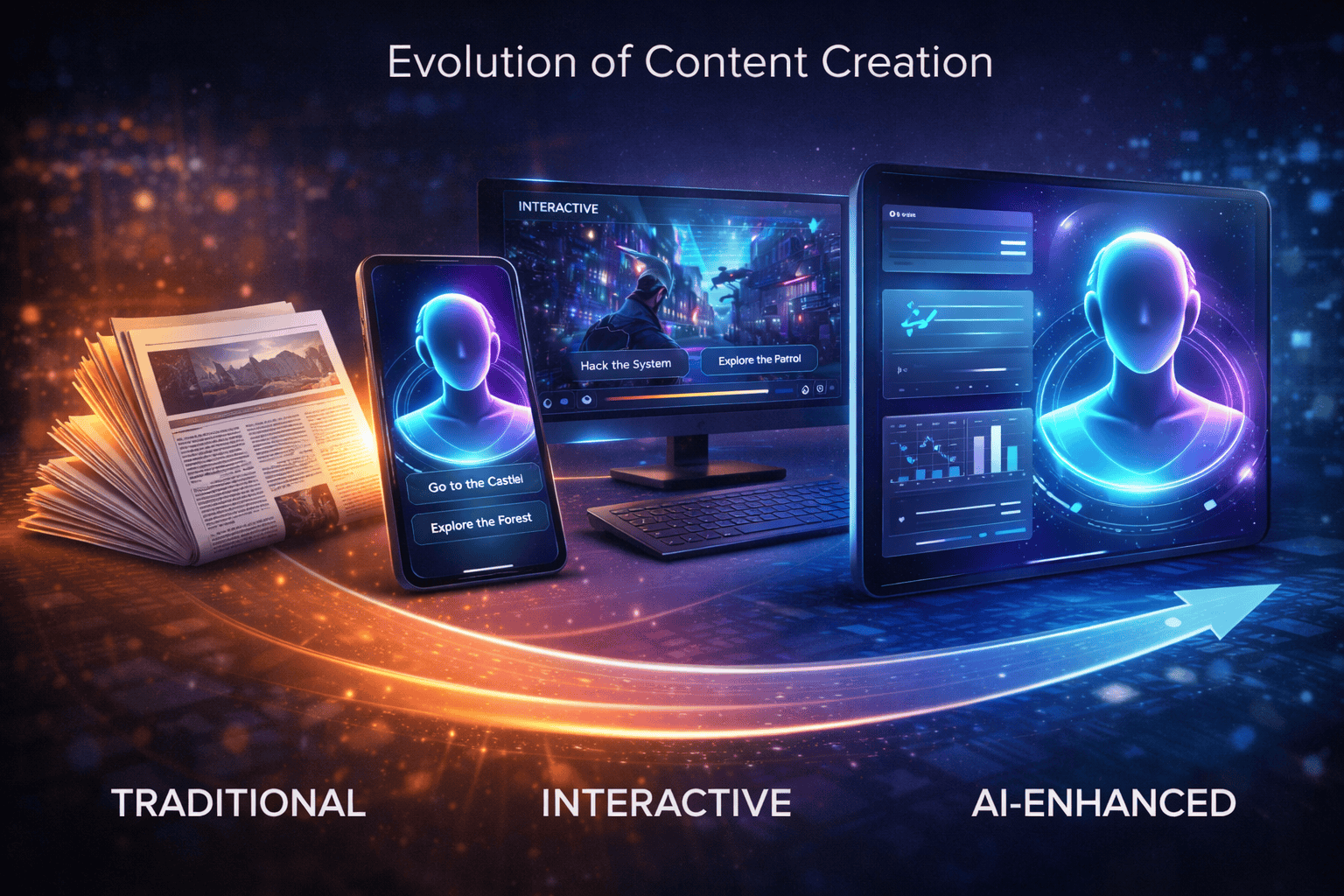
A graphic representation of the evolution of content creation, featuring traditional content formats transitioning into interactive and AI-enhanced formats, symbolizing the future landscape of content strategies.


Navigating Negative Sentiment

Of course, no brand is immune to negativity. However, the approach to handling negative social media sentiment has matured. In the past, the strategy was often to delete, ignore, or issue a sterile press release. In 2026, the strategy is "The Aikido Approach"—using the energy of the attack to pivot to a positive outcome.

Brands are using negative sentiment as an opportunity to demonstrate superior customer service publicly. A complaint is viewed as a stage. By resolving the issue with speed, empathy, and generosity in the public eye, brands can convert a detractor into a promoter. The audience watching the exchange sees a brand that cares, often resulting in a net increase in positive sentiment despite the initial complaint.

Financial Implications: Sentiment and Stock Price

Perhaps the most compelling evidence of this shift is the correlation between sentiment and valuation. Investment firms and hedge funds in 2026 are scraping social data to factor social media sentiment into their trading algorithms. A sustained dip in sentiment is now a leading indicator of a drop in quarterly earnings.

CMOs are now presenting sentiment analysis data in boardroom meetings alongside traditional financial KPIs. They are demonstrating that investing in brand love—through better customer service, ethical sourcing, and community engagement—is not just a "soft" cost but a hard investment in the company's financial future.

Conclusion

As we look forward, it is clear that the transactional nature of the internet is being replaced by a relational one. Social media sentiment is the metric that captures the health of those relations. In 2026, brand loyalty cannot be bought with ad spend; it must be earned through emotional intelligence, consistency, and genuine care. For brands willing to listen to the heartbeat of their audience, the rewards are loyalty, longevity, and a level of advocacy that money simply cannot buy.


Social Media Advertising Strategies for Small Businesses

Social Media Advertising Strategies for Small Businesses

Social Media Advertising Strategies for Small Businesses

Social media has become an integral part of many small business marketing strategies. With billions of people using social media platforms like Facebook, Instagram, and Twitter, it’s an excellent way to reach a broad audience and increase brand awareness. However, to get the most out of social media advertising, small businesses need to have a clear strategy in place. In this article, we’ll discuss some effective social media advertising strategies for small businesses, along with examples.

  1. Define Your Target Audience

The first step in any social media advertising strategy is to define your target audience. Who are the people you want to reach with your ads? What are their interests, demographics, and behaviors? By understanding your target audience, you can create ads that are tailored to their needs and interests.

Example: A local coffee shop might target people in the local area who are interested in coffee, food, and drinks.

  1. Set Clear Objectives

Before you start advertising on social media, it’s essential to set clear objectives for what you want to achieve. Do you want to increase brand awareness, drive website traffic, generate leads, or increase sales? By setting specific objectives, you can measure the success of your ads and adjust your strategy accordingly.

Example: A small online retailer might set an objective to increase website traffic by 20% in the next month.

  1. Choose the Right Platform

There are many social media platforms available, and it’s essential to choose the right ones for your business. Facebook, Instagram, Twitter, LinkedIn, and Pinterest all have different audiences and advertising options. Consider which platforms your target audience uses and which ones are best suited to your advertising objectives.

Example: A small B2B software company might choose to advertise on LinkedIn to reach a professional audience.

  1. Create Engaging Ad Content

To be effective, your social media ads need to be visually appealing and engaging. Use high-quality images and videos, and write compelling ad copy that grabs the attention of your target audience. Consider using humor, emotional appeals, or other tactics to create a connection with your audience.

Example: A local pet store might create an ad featuring a cute puppy with the tagline, “Bring home your new best friend today!”

  1. Use Targeting Options

Social media advertising platforms offer a range of targeting options that can help you reach your desired audience. You can target people based on their interests, behaviors, demographics, and more. Use these targeting options to ensure your ads are seen by the people most likely to be interested in your product or service.

Example: A small fitness studio might target people in the local area who are interested in health and fitness.

  1. Monitor and Adjust Your Campaigns

Once your ads are live, it’s essential to monitor their performance and adjust your campaigns as needed. Use the analytics provided by social media platforms to track your ad’s reach, engagement, and conversions. If your ads aren’t performing well, try adjusting your targeting, ad content, or bidding strategy.

Example: A small clothing retailer might adjust their ad targeting based on which products are selling the best.

Social media advertising can be an effective way for small businesses to reach a broad audience and increase brand awareness. By defining your target audience, setting clear objectives, choosing the right platform, creating engaging ad content, using targeting options, and monitoring and adjusting your campaigns, you can create a successful social media advertising strategy. Remember to experiment with different ad formats, targeting options, and ad content to find what works best for your business. With a well-crafted social media advertising strategy, small businesses can compete with larger companies and reach their desired audience effectively.

5 Key Benefits Of SEO For Small Businesses

5 Key Benefits Of SEO For Small Businesses

5 KEY BENEFITS OF SEO FOR SMALL BUSINESSES

The importance of SEOs in businesses cannot be over-emphasized, for it helps in owners of businesses to create a fast, robust and user-friendly websites that rank higher in search engines and brings more qualified potential customers to their sites.

      The following are some major benefits of SEO for small businesses.

(1)  It creates a faster, smoother and user-friendly website.. If a website is well-structured, clean and unclustered, it will make a casual visitor stay longer, thereby decreasing bounce rate and increasing page views. Also, highly relevant content keeps readers happy as they provides answers and solutions to their problems or curiosity. It also gives them an answer to the exact thing they come to look for in your site.

(2)   It brings in more customers to your sites  and not just ordinary customers but also targeted customers. It is also relatively cheap and a more efficient marketing strategy used today.

(3)   It has a better rate of conversions. SEOs optimizes websites, loads faster, are easy to read and surf, and will display in almost types of devices. Websites that are easy to read and navigate are more likely to grab and hold attention from your readers or visitors. They may eventually become your loyal customers, subscribers and returning visitors.

(4)   SEOs helps in building brand awareness. For a small business to build a better brand awareness, it is important it use an SEO. This is because when your sites appear on the first page of a major search engines like Google, Yahoo and Bing, your potential customers are more likely to trust your brand when they search for a particular term rather than other brands that do not have a strong website.

(5)   It enables you to bypass a competition. When you use a SEO and your competitor does not, you have every tendency to attract more customers to your website than your competitor. Your business will also grow faster and become more successful in time than your competitor’s.

       With these benefits listed above, As a small business owner, you should utilize SEO to build a strong web presence and bypass your competitors to gain new customers for your business and take it to the next level.

Social Media Changes in 2018

Social Media Changes in 2018

So last year in the social media world was a bit mad. There were so many big changes that left one's head spinning. Here are just a few that we noticed.

#1: User lost confidence in Facebook as a whole last year. From issues with Cambridge Analytica, combined with the non-stop negative press about how Facebook used your profile data, prompted a lot of people to find new places to hang out online.

#2: Twitter cracked down on automation. If this has been part of your plan, that's a strategy that's no longer working as Twitter cleaned up its user experience. And deleted many suspect accounts.

#3: Facebook reduced the reach of all content. In an effort to refocus its users on meaningful conversations, FaceBook essentially halted most organic reach. Goodbye traffic!

#4: Instagram launched IGTV. In an attempt to create an alternative to YouTube, they created a new long-form vertical video platform.

#5: YouTube rolled out Stories. Not wanting to be left behind, they decided to become "Instagram-like."

#6: Facebook overhauled groups. Adding Watch Parties, analytics, and badges for active users, FB went all-in on this product.

#7: LinkedIn revamped groups. This Microsoft-owned platform decided to overhaul its groups product to appeal to more users.

And let's also not forget the global rollout of FB Watch, new ads formats (think Stories ads and ThruPlay), and GDPR...
There's a pretty good chance your strategies have been thrown out the window. The only constant in our industry is change. Industry analysts expect 2019 to be a breakout year for innovation as the social platforms shake off the GDPR changes and focus on competitive differentiation.

Improving Your Lead Generation Using A/B Testing

Improving Your Lead Generation Using A/B Testing

Improving Your Lead Generation Using A/B Testing

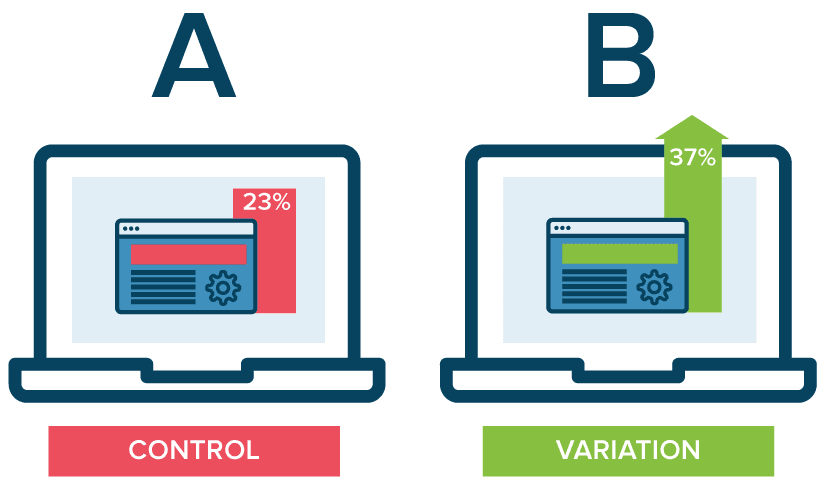
A/B testing or split testing is comparing two versions of a web page to see which one performs better. This allows you to make more out of your existing traffic.  You can A/B test anything on your website; your headlines, subheadings, testimonials, paragraph texts, links, images etc. Advanced tests can include pricing structures, sales promotions, free trial lengths, navigation and UX experiences, free or paid delivery, and more. A/B testing is a great way towards improving your lead generation website. So, what areas should you improve using A/B Testing?

  1. Navigation menu

The navigation menu can have a big impact on visitor behaviour. Tweak the phrasing of menu items as well as the order, and see what results in more clicks. You could also try experimenting with different formats like a horizontal or vertical menu – or a fixed bar that stays put when visitors scroll down.

  1. Content offers

You have some great educational content that will help take visitors through the buying cycle. But which will you promote the most? You could offer an introductory guide as a free download on the home page. But perhaps linking to your blogs, and offering the download there, might get a better response.

  1. Images

There are many different options for how to display images on your site. Will you use people, products, places or illustrations? Images can be appealing, but don’t jump to conclusions. They might actually be distracting from the action you want visitors to take. Sometimes, less is more.

  1. Call to Action

A call to action refers to any device designed to prompt an immediate response or encourage an immediate sale. What you do with your call to action can make a big difference to how many leads you generate and convert. Think about phrasing, positioning, colour, and whether you use buttons or links. Do you have a lot on the page, or just one?

  1. Personalization

You can personalize a website in many different ways; by location, recommended purchases, and different messaging for new and returning visitors. If you know someone has already downloaded content, you could test what follow-up offers work best.

  1. Tone 

It’s not just what you say, but how you say it, too. You might have been writing blogs using an authoritative voice, but find that more irreverent copy generates more leads. Or perhaps you’ve been trying to express excitement, when actually a more down-to-earth voice will gain more trust.

  1. Forms

The design of your forms on landing pages can make a big difference to how many leads you generate, and this is a key area where people might drop out of the buying cycle. You need to make sure you are gathering important information without putting people off. Will you just ask people for an email address, or their name and job title as well?

  1. Mobile UX

You absolutely must consider the experience of visitors using mobile devices. Mobile screens can display less content – so test different navigation options like scrolling, buttons, and blinds to see what works best. The size of images and headers is another important consideration.

  1. Social media

Don’t forget to think about how you provide people with options for sharing your site’s content on social networks. You could test different sizes, designs and positioning of sharing buttons. How will you prompt people to join your networks?

  1. Pricing

How you display pricing information is one of the most sensitive and important things to consider. Should you present prices immediately, or wait until further in the buying cycle? And how prominently should you do it? For subscriptions, is it better to display annual or monthly prices?

As you can see, there are lots of different aspects of your site you can play around with – and some of them can make a really big difference. Making judgment calls on all of this is a daunting prospect. Thankfully, A/B testing can help by giving you the hard data.

This article was first published in

http://blog.tomorrow-people.com/10-areas-of-a/b-testing-on-your-website-to-improve-lead-generation?utm_source=hs_email&utm_medium=email&utm_content=52655781&_hsenc=p2ANqtz-9TB0CcWgtNJHIjQ5YLKUfkONPo37-M0ak9EzBLu7BmsRefXkHMvyHBnwWC_sxxmMc4GHBpHCkXWOc2cHCOdfF6AKnclg&_hsmi=52655781

Why You Should Do a Social Media Audit of Your Brand

Why You Should Do a Social Media Audit of Your Brand

Why You Should Do a Social Media Audit of Your Brand

Now, I know the word “audit” sends the shivers down your back and conjures up the image of the boogeyman used to scare business owners into updating their tax payments. However, as a business owner it is imperative you do a social media audit of your social media marketing. A social media audit is a series of steps taken to evaluate and optimize a business’s social media profile and strategy. Below are eight reasons why you should do a social media audit of your brand.

Why you should do a social media audit of your brand

  • A social media audit gives you the opportunity to see what’s working and what’s not in your social media strategy and thus, allows you learn how to improve upon it for the future.
  • The information gotten from an audit allows you to develop a strategy if you don’t already have one and if you do what areas to tweak and improve upon.
  • An audit also helps to evaluate what the future goals for your social media strategy should be and start connecting your content marketing to it.
  • In addition, Everyone stands to benefit from an overview of their social media standing; from the top man down to the social media account handler.
  • With many moving parts going on with social media today, an audit helps you uncover the hidden gaps.
  • A social media audit from an objective social media guide empowers you to know which areas to focus your resources on for maximum result.
  • A social media audit helps you find out why your social media isn’t converting, pinpoint areas in need of improvement and discover how to get more conversions.
  • Also, by assessing how your competitors are faring on social media, an audit reveals how to get more customers thus giving you an advantage.

Pin It on Pinterest